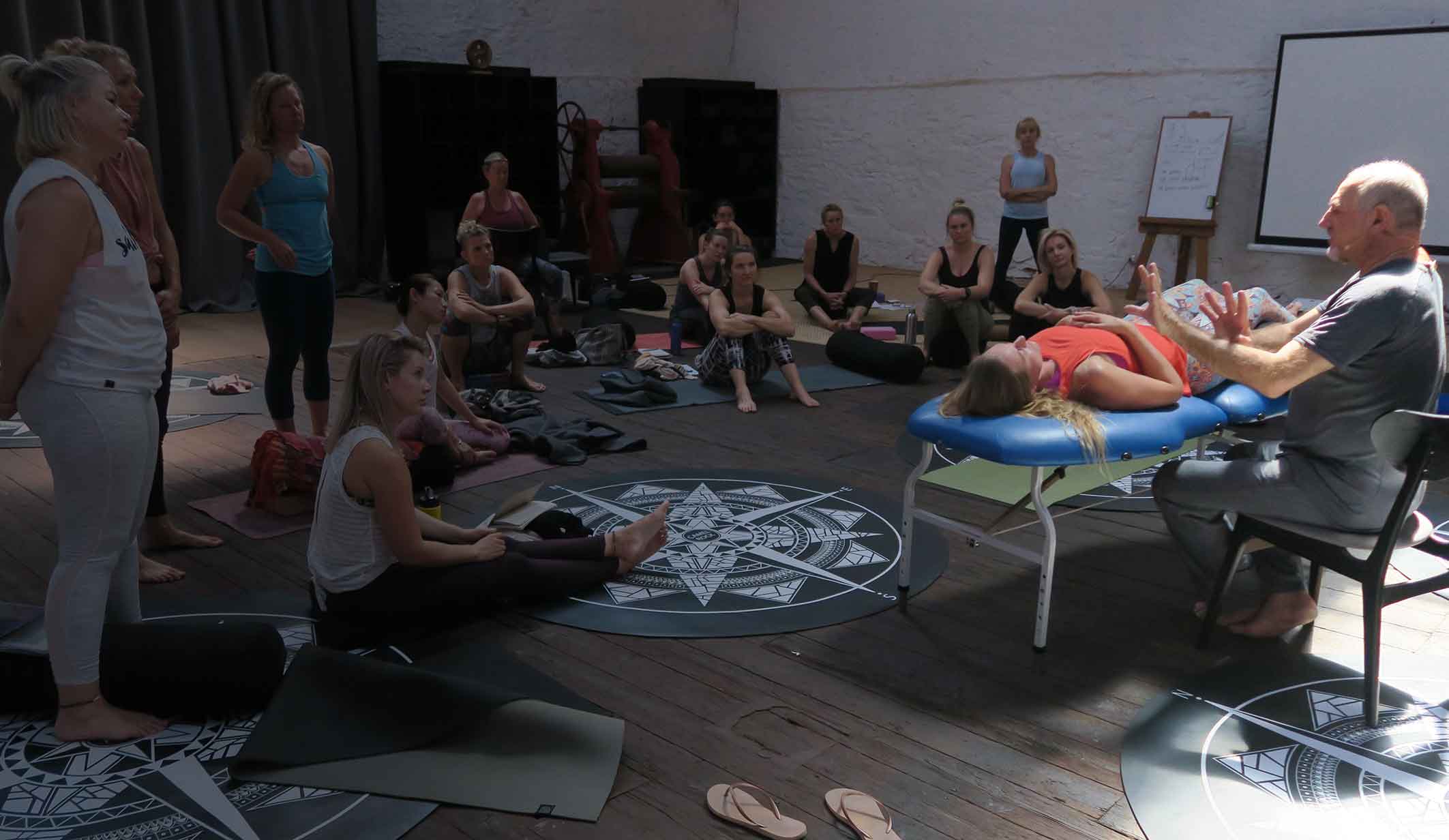
Leslie seated at a massage table demonstrating a technique for a roomful of students

Leslie Kaminoff is a best-selling author and yoga educator.

Blog

  • Legislative Update

    Here’s an update, and the background info on the recent battle to keep New York State from passing legislation that would affect the freedom of N.Y. Yoga teachers to ply thier trade.
    The “URGENT UPDATE” on the Health Freedom New York website clearly refers to our efforts to keep Yoga out of this legislative process. I definitely do not support the bill they’re sponsoring, although the one I’ve been fighting is far worse.

    HFNY’s website refers to thier “conditional support of the New York Freedom of Access to Natural and Complementary Practices bill, S3334-A and A04404 b, which was amended to remove the registration component, to exclude yoga and reiki and was published on June 20th and June 21st, 2005 respectively.”

    BACKGROUND

    On April 20, 2005, I was forwarded a message that bagan like this:

    From Health Freedom NY:

    There is a bill currently in the Senate and Assembly that is being presented as a bill that would open access to all the alternative practitioners in NYS. In actuality it mandates registration for all of these practitioners and unleashes unlimited regulatory potential by the Secretary of State over 40+ modalities. We have a deadline for contacting the Senator and Assemblyman that are sponsoring this Mandatory Registration Bill for alternative practitioners to stop this bill.

    I researched the bill in question, and posted this on April 25:

    This posting is critical specifically for New York State resident Yoga teachers, and generally for Yoga teachers everywhere. I urge you to read it carefully.

    I received this information a few days ago, and have been researching it. There is New York State legislation pending that must be defeated if the profession of Yoga teaching is to survive as an independent field. For those of you who have been following e-Sutra for a while, my views on the destructive effects of government interference in yoga teaching will not be a surprise….

    I went on to comment on the ideas being presented by Health Freedom New York. My comments are inserted below:

    Welcome to the Web page of Health Freedom New York!

    Our mission is to ensure the right of every citizen of New York State to utilize any healing modality of their choice that they determine beneficial for their health.

    What are the problems?

    • Consumers don’t have adequate access to the wide diversity of healing modalities available in the state of New York.

    ((LK: I don’t understand this statement. What is preventing consumers from having adequate access to healing modalities? This statement is presented as self-evident absolute, with no supporting evidence. I suspect I know what they really mean, but they’re not saying it outright — see my comments below. ))

    • Although title eight of education law exists to regulate high risk invasive modalities, practitioners of the low risk non invasive healing modalities technically risk fines and prosecution.

    ((LK: Again, this statement lacks any supporting evidence. What “low-risk” modalities are being referred to? The actual Title VIII regulations can be found at:
    http://www.op.nysed.gov/title8.htm
    I don’t see anything in the professional descriptions that even come close to covering yoga teaching, but if yoga ever does come under Title VIII, it would be the death of freedom in our field. ))

    • The Policing power of the state has been increased, raising the risk to practitioners.

    ((LK: How has it been increased? ))

    • The proposed mandatory registration bill – S3334/A4404 -has sought to address these problems with legislation requiring mandatory registration and proposed unlimited regulatory potential. We feel these therapies do not warrant registration or regulation as there is no historical precedent of imminent danger to the public.

    ((LK: I would like to see the word “feel” banned from these types of discussions. What makes my feelings more valid than yours? Let’s deal in facts, please. ))

    • Naturopathic bills – Similarly, there are several naturopathic bills that seek to define low risk non invasive therapies as being akin to modern medicine with its legend drugs surgery invasive therapies and radiation; and therefore these bills seek to create a level of regulation that would require a license.

    Solutions

    Craft legislation that:

    ((LK: We should be taking a strong stand for NO legislation, as there is no actual problem that needs to be fixed, other than the natural tendency of regulators to regulate, and legislators to legislate. We should not be trying to play their game with them.))

    • Acknowledges the history of safe use of these non invasive low risk modalities.

    • Remove the threat of prosecution on technical violation of title eight without unwarranted regulation that restricts access and implies danger.

    • Increases consumer access to these modalities.

    ((LK: Again, regulation of any kind decreases consumer access. It only results in access to the practitioners who play by the involuntary rules laid out by the state. ))

    Goals

    • To allow consumers to have access to the wide diversity of healing modalities available in New York state

    ((LK: This is already the case. The right to choose among many alternatives is just that: A RIGHT — it is not a privilege dispensed by the state, that we need to go begging for.))

    • To foster the growth of these modalities through increased access and consumer education.

    ((LK: You want to really know what “increased access” means in this context? It can only mean insurance reimbursement. I have long argued that insurance reimbursement is de facto government regulation. If anyone truly values their freedom to teach yoga, they should fight the move towards insurance reimbursement. For more support of this argument, see the e-Sutra threads I’m forwarding shortly.))

    • To educate legislators and policy makers as to the demand for these low risk and non invasive healing modalities

    ((LK: I’ll submit that the regulators already know of the demand for these services — otherwise why would they be bothering to propose legislation to regulate it? ))

    ———————–

    Next, I posted a follow-up to the above post the next day:

    First, I need to state publicly that the opinions and information I offer on e-Sutra are exclusively my own, and not in any way connected to the charter, purpose or activities of The Breathing Project, Inc., a New York State 501(c)(3) tax-exempt educational corporation.

    Now, here’s some more vital information regarding the proposed legislation in New York State to regulate “Complimentary Practices.” It is clear that this could well include yoga therapy.

    At first glance, it may seem wonderful that the State is acknowledging the value of these practices by recognizing that people are seeking them out in greater numbers every year. BUT, on closer reading, it becomes clear that they are simply opening the door to an unlimited regulatory power over every aspect of health care, from Yoga Teaching, to Yoga Therapy, to Reiki, to Feldenkreis, to Pilates, to, well, you name it….

    For example: “…No person shall engage in natural and complementary practices unless such person is registered as a natural and complementary practitioner in accordance with the provisions of this article…”

    Simply stated, what this means is that most of the current activity in the natural healing and therapeutic yoga world will be rendered illegal by this legislation, unless you pay your $150.00 dollar registration fee, and agree to play by their rules.

    What’s the big deal, you may ask? Well, read on:
    “Such person shall file with the secretary an application to be registered in such form and detail as the secretary shall prescribe setting forth:
    (a) the name and address of the applicant;
    (b) the date of birth of the applicant;
    (c) the name, business address or addresses at which the applicant will conduct business or be employed;
    (d) the education, training, experience and/or other qualifications of the applicant;
    (e) if the applicant is licensed or certified pursuant to title eight of the education law, an attestation that he or she has not had a license or certification suspended or revoked; and
    (f) any further information deemed reasonably necessary to accomplish the purposes of this article.

    In other words, they want to know exactly who you are, where to find you, what your training is, and via (f), any other information that they may, in the future, deem necessary to tighten their regulatory grip on your activities. Make no mistake about it — this bill gives the State unlimited, arbitrary carte blanche over you, your business, and your freedom. I would challenge anyone to explain to me how paying the State’s fee, and playing by their rules is any different from paying protection money to the mob to keep them from trashing your business. If I threaten to beat the crap out of you unless you pay me $150.00, what is your money buying? The removal of a threat is not a value.

    Another clever tidbit from 491-3. is this:
    “Natural and complementary practices” means care and services that have not been proven to be deleterious….”
    Sounds innocuous? Not really. If some proof is offered that your practice is deleterious, it will be considered illegal to practice it. If it is not deleterious, it will be illegal to practice it without registering with the State. Either way, they’ve got you.

    It’s important to remember how capricious and arbitrary the government’s definition of “deleterious” can be. Remember when you could buy Ephedra (Ma Huang) at the health food store? Well, it was “proven” to be deleterious, even though many more people die every year from abusing approved over-the-counter drugs than the 100 “possible” deaths linked to Ephedra abuse.

    If immediate and overwhelming objection to this legislation does not reach Albany soon, it is clear to me that this law will pass. The sad irony is that the people supporting it will think they’ve done a great favor to the alternative and complimentary health fields by welcoming them into the fold of mainstream healthcare regulation.

    So, if you think mainstream healthcare delivery in this country is doing just fine, and you want to be part of it, do nothing. If you want to keep alternative health care truly alternative, then don’t waste any time flooding Albany with your objections.

    Thanks for your attention.

    Leslie

    Here is a link to a site where you can read the bill for yourself:
    NY Natural and Complimentary Practices Project

    ————————————————

    Well, my muckraking in the Yoga community got the attention of the Homeopaths who were sponsoring the legislation, and they felt the need to directly address the yoga community to counter my objections:

    Posted to e-Sutra on May 7th, 2005

    The following message was sent out to yoga teachers in NY by The New York Natural and Complementary Practices Project (they didn’t send it to me, but it was forwarded to me by several teachers). I don’t know who the actual author of the letter is, but it is signed by their entire board. I have looked up these people on the web and attached information about them below.

    I am posting the NYNCPP letter with my comments interspersed.

    May 3, 2005

    Dear Member of the NYS Yoga Community,

    RE: FREEDOM OF ACCESS TO NATURAL AND COMPLEMENTARY PRACTICES S3334/A4404

    On behalf of thousands of supporters of health freedom in NY, we the Board of Directors of the New York Natural & Complementary Care Project (NYNCPP) welcome this opportunity to familiarize you with NY’s health freedom legislation, especially as it pertains to yoga teachers.

    ((LK: I would very much like to know who these thousands of people are. Do you you have a petition, or some sort of membership list? What exactly is your constituency? ))

    We acknowledge the campaign being waged against S3334/A4404 in the state yoga community this week and hope that this will help put the information from Health Freedom NY in perspective. If you have not heard of this campaign, we hope this message will still serve to educate you on this important NY legislation. We encourage and welcome your questions and comments.

    ((LK: I’m impressed that my activities — writing 4 e-mails to my list, and corresponding with Kathy Lukas — have risen to the level of a “campaign” in just a few short days. ))

    NYNCPP – SEEKING TO BROADEN AND PROTECT ALL HOLISTIC ARTS. NY’s freedom of access bill [see Law at www.nyncpp.org] will broaden and protect the ability of New Yorkers and those that come to NY for natural and complementary care to access information about a broad array of holistic arts.

    To understand the need for this bill, one must understand that access to information about natural care requires access to practitioners and that there are two classes of unlicensed holistic practitioners working in NY today. The first includes practitioners of yoga, Reiki, and those arts that are generally seen as needing no regulation or protection. The second group includes practitioners of homeopathy, polarity, reflexology, and other arts that have grown substantially over the past 15 years. This group is vulnerable to being viewed as practicing medicine or massage without a license, criminal acts in NY.

    S3334/A4404 will recognize and protect our rights of access to the second group. It is a simple bill with simple solutions for complex problems, and when passed it will be a law that yoga practitioners will never need.

    ((LK: This is the crux of the problem right here. You are presenting a self-contradictory bait-and-switch.

    Here’s the contradiction:
    If consumers’ access to information about practitioners of Homeopathy, Polarity, Reflexology, and other arts is so limited that they need your legislation to protect it, then how have these arts managed to grow so substantially over the past 15 years?

    Another contradiction:
    If information has truly been limited, it needs exposure in the free market of healthcare, not protection by the state.

    There has been, in fact, no legal limitation on consumers’ access to the practitioners at all. What has been limited is the ability of some practitioners to get medically licensed by New York State, so they can do business without fear of prosecution.

    Here’s the bait-and-switch:
    You are creating the illusion of a non-existent CONSUMER problem, and proposing PRACTITIONER LICENSING legislation as a solution.

    Am I in favor of the State using its police power to suppress these practices by arresting unlicensed practitioners in the absence of “a claim of fraud, misconduct, harm, or the threat of harm?” Absolutely not. If holistic healthcare providers want to practice freely without this threat, they could band together into professional certifying bodies that demonstrate high standards of education and ethics among their own members. If they wish, these bodies could then go to the state and seek licensing recognition, just as Massage Therapists and Acupuncturists have done. Or, they can lobby to avoid State regulation, as Yoga teachers have done.

    Why haven’t the venerable professions of Homeopathy, Naturopathy and Reflexology sought state licensing? Is it possible that they couldn’t demonstrate the medical benefits of these practices? Is this why you chose to word the legislation: “Natural and complementary practices means care and services that have not been proven to be deleterious.” This clearly shifts the burden of proof from you (to prove efficacy) to the State (to prove harm).

    Your legislation is nothing more than an attempt to circumvent the standard medical licensing process by creating a single category of non-medical, “non-deleterious” licensed practitioners who will be subject to State controls.

    Above, you describe “two classes of unlicensed holistic practitioners working in NY today. The first includes practitioners of yoga, Reiki, and those arts that are generally seen as needing no regulation or protection. The second group includes practitioners of homeopathy, polarity, reflexology, and other arts.”

    “Generally seen” by whom? This is very vague language, and not a distinction that appears in any law or policy that I’m aware of. More importantly, this distinction does not appear in the law you are proposing. This is where your statements are objectively at odds with the language of the ASSEMBLY BILL #A4404 and SENATE BILL #S3334.

    The only distinction that’s made between groups of healing practitioners in the language of your law is between those who are currently licensed, and those who practice “Natural and complementary…care and services that have not been proven to be deleterious.” Regarding the distinction between the “two classes” of practitioners you describe, where is it in your proposed law, or in any law, rule, regulation or guideline currently on the books in NY State? If you can show me where this distinction exists in any of the aforementioned places, I’ll gladly withdraw this objection. ))

    BROAD LEGISLATIVE LANGUAGE TO ESTABLISH BETTER PUBLIC POLICY IN NY. You may also have heard this week that this bill could affect your rights to work because its language is so broad as to require yoga, Reiki, and other practices to register their businesses with the state and employ consumer protection devices required by the bill. This is a misreading of the bill with no legislative or historical basis to justify it.

    ((LK: My position is based on a clear reading of the actual text of the actual bill, and I invite you to demonstrate otherwise via reference to the wording of your own bill. ))

    For evidence that no risk accrues to yoga or Reiki practitioners under health freedom legislation, we ask that you contact your colleagues in MN, RI, and CA where legislation like NY’s bill has been passed in the past four years. In none of these states has health freedom law changed the conduct of yoga or the state’s relationship to yoga.

    ((LK: If the wording of the law in those states is the same as the proposed NYS law, then it’s just a matter of time before those states begin to regulate yoga via the power given to them by the above-referenced laws. Just wait for some highly visible case involving a severe yoga injury caused by some under qualified instructor to hit the media, and you’ll see how quickly it will happen.

    ****Can you state with absolute certainty that, if the State chooses to, it would be UNABLE to regulate Yoga using the power given to it by your law? This is the real question you need to answer.****

    Bolstering your argument with the fact that this has not yet happened in other states is like putting a loaded gun into the hands of a child and saying, “Look, see! It’s safe because he hasn’t killed anyone yet!” ))

    In summary, if your practice is not vulnerable to being viewed as needing a license today, it will not be affected by health freedom law when it passes.

    ((LK: Viewed by whom? There are already people who think Yoga and Yoga Therapy should be licensed professions. I should know — I’ve been fighting against their ideas for the past 6 years on my list, e-Sutra.))

    If your practice is vulnerable, perhaps because of what you say or would like to say in your advertising or to your clients, the health freedom law will be there for your use, should you decide to employ it.

    ((LK: You really don’t understand the nature of licensing if you can make this statement. If your profession comes under the purview of this law, it will not be a matter of “deciding to employ it.” It will be ILLEGAL for you to practice unless you register! I refer you to the language of your own bill:
    “No person shall engage in natural and complementary practices unless such person is registered as a natural and complementary practitioner in accordance with the provisions of this article”

    When medical licensing was enacted for M.D.’s they had no choice about whether they decided to use it, and if your law is enacted neither will we. ))

    NY’s health freedom law will be available for individuals who need to use it, but it will not require use by all members of any profession, least of all professions that enjoy full freedom of practice today.

    ((LK: Again, this distinction does not exist in the wording of the bill. ))

    LISTING COVERED PRACTICES. You were perhaps told this week that listing practices covered in S3334/A4404 in the bill itself would be useful for avoiding a risk of yoga teachers being captured under the bill. Because the arts and sciences of Holism are alive and growing at an unprecedented rate, we do not want to leave New Yorkers in the position of having to amend state law every time a new natural and complementary practice evolves. So NYNCPP is aiming to establish state policy regarding natural care and have that policy be there for all holistic practices for a long time. That’s what our bill does and what all health freedom legislation does. And the same holds true whether practices are listed in the legislation or not.

    ((LK: This is utter nonsense, and it contradicts everything you’ve said about the law not affecting Yoga. What the above statement suggests is that thanks to your far-reaching legislation, no healing profession, ever again, in NY State, will have to go through the process of State approval for their practice — no matter how new, unproven, whacky, or undocumented it may be. All a newly-minted “healer” would have to do is say, “Hey, you’ve not proven my modality to be deleterious, so here’s my $150.00 fee — now give me my license to hang on the wall, and some initials to put after my name.” ** This is NOT how to protect consumers! ** ))

    Many holistic practices are listed in the laws in MN and RI, with the language, “…including but not limited to…”, allowing for the law to protect future practices as they arise and need protection (and to capture yoga if there were such a risk). Practices are not listed in the CA law. Under both models (list and no list), in the four years since the first health freedom law took effect in MN, no profession has been caught up in a web of overregulation, and there is no evidence that one will. Holistic practices have been protected in ID since 1977, but yoga teachers have not been swept up in over regulation there either.

    ((LK: In the present political climate, my position is that it’s only a matter of time before Yoga is captured by the existing laws in the states you mentioned, if those laws give them the power to regulate anything they want to at any time, without the need for any additional legislation. Your NY bill targets Yoga by default, but would allow the State to target it at will.))

    In short, if you are legal today, you will be legal after passage of this bill. Legal for purposes of this discussion means that as a practical matter you are practicing as you wish and you can advertise and run schools and other institutions in NY. Practitioners in the class of practitioners that health freedom legislation will protect cannot do any of these things without significant risks to their freedom and livelihoods.

    ((LK: Then let them go through the same process that Massage and Acupuncture went through in order to become legal. All your protestations to the contrary notwithstanding, this really boils down to Naturopaths, Homeopaths and Reflexologists seeking to establish for themselves a less demanding form of medical licensing; and in the process, dragging everyone else into State controlled licensure with them. No thank you. ))

    We ask for your help in helping NYNCPP to grow the natural arts in NY by changing the law as it pertains to practices that do not as yet enjoy the full warmth of freedom.

    You can learn more about our bill and NYNCPP at www.nyncpp.org, especially under Mission and FAQs. From any page on the site, you can register your support for your right to access the natural and complementary care of your choice. We hope you will join us in the last months of our six year campaign to legitimize and protect natural and complementary care in NY. If you have any questions, you may contact us at info@nyncpp.org or if you reply here, we can add you to an e-list of persons that are interested in NY’s health freedom legislation and that receives copies of regular e-mails to our supporters in NY.

    Lastly, we want you to know that Health Freedom NY, the “organization” behind this week’s campaign to discredit health freedom, is a trio of homeopaths that has been working for a year to defeat support of NY’s bill in the homeopathic community. Their opinions and lay reading of law has been found so wanting by homeopaths that HFNY has been driven to look outside of their own community for support. We are sorry that yoga teachers and others are the new target of HFNY’s campaign.

    ((LK: Nothing of the sort has occurred. I was e-mailed a notice about the legislation and their meeting, and forwarded it to my list. They are not behind this week’s campaign, I am. I profoundly disagree with the ideas of three women you mentioned, and I said as much on e-Sutra. I do, however resent the continued use of the term “lay reading” when it pertains to the questions raised by an ordinary citizen who reads the bill. It is written in plain English, and the concerns that were raised by my “lay reading” were confirmed by my attorney. Using “lay reading” to disqualify the opinion of anyone who disagrees with you is a condescending tactic.))

    We are confident that most in your profession, after considering both sides of the questions presented by HFNY and others, will find the Freedom of Access bill a bill long overdue in NY and worthy of your support.

    We wish you the best and hope to hear from you with your comments or questions. Please pass this on to other yoga practitioners.

    The Board of Directors of NYNCPP

    ((LK: I have attempted to determine the identities of the board members of NYNCPP, and have indicated below my best guesses. I apologize for any errors in my research.))

    Paul Van Blarcum, President (Acting Chair,Town Council, Town of Shandaken Planning Board – Phoenicia, NY)

    Karen Crowe, Vice President (spokeswoman for the NYC Board of Education)

    Marcy Meiller, Vice President (another Phoenicia resident)

    David Cook, Secretary (Prince Street Reflexology, NYC)

    Josephine Heck, Treasurer (Resident of Richmond Hill, NY)

    Dr. Terry Bellman, President of the Board (DDS – General Dentist, NYC)

    Dr. Carolyn Dean, Vice President of the Board (Dr. Carolyn Dean, MD ND – Author of “Death by Modern Medicine” )

    Shelby Werwa (Video Producer)

    Luke Bellman (The only Luke Bellman I could find appears to be a football player for Guilford College in Greensboro, NC)

    ———————-

    To date, there has been no response of any kind that would indicate that any of the above-listed people have even read my rebuttal.

    My dealings with the main spokesperson for the bill, Kathy Lukas, have shown her to be a complete knucklehead who doesn’t even read her e-mails before responding defensively to them. I’ve given up trying to penetrate her self-righteous fog of “good intentions,” and haven’t had any contact with the bill’s other sponsors since I posted my rebuttal.

    The bottom line, as far as I can tell, is that the Homeopaths and Reflexologists who sponsored this bill want to be able to diagnose and treat disease without having to go through the trouble of creating traditional medical licensing for their professions; and they are willing to drag everyone else (including Yoga teachers) into State regulation in order to do so.

  • Call for Articles for new IAYT Publication

    The International Association of Yoga Therapists (IAYT) is launching a new publication, Yoga Therapy in Practice (YTIP). This print newsletter will provide the kind of practical ideas that Yoga professionals want: teaching tips, yoga therapy case studies, business advice, interviews, networking support, and more. A free subscription to YTIP is included in IAYT membership.
    Our first issue will be produced in September 2005. We are currently seeking brief articles for this issue. Articles for the September issue should be submitted by August 1 to Kelly McGonigal. Articles for later issues may be submitted on an ongoing basis.

    What kinds of articles are we looking for?

    • Practice recommendations/case studies: Descriptions of practices that a yoga professional has designed for a specific condition/individual, with an explanation of how this practice benefits the condition/individual’s needs. (500-1000 words)
    • Professional advice: Practical business advice that reflects Yoga philosophy. (500-1000 words)
    • Interviews: Q&A with leaders in the field of Yoga or integrative medicine. (400-700 words)
    • Teaching reflections: First-person accounts from yoga teachers/therapists. (400-600 words)
    • Training reports: First-person accounts of a specific training program, designed to help other yoga professionals decide whether the program would be helpful for them. (250-500 words)
    • Brief research reviews: Summaries of available evidence for yoga as a therapeutic intervention for a specific condition or population (i.e., Yoga and arthritis). These reviews should be clear, concise, and current, and provide full documentation of sources. (Length will vary by topic and available research.)
    • Media reviews: Books/DVDs/Videos/CDs. (200-400 words) Contact us if you would like to be a reviewer, or to recommend a product for review.
    • Any other topic that you think will interest Yoga teachers, Yoga therapists, and health care professionals who use Yoga in their practice.

    Submitting an Article to YTIP

    • Please send your article as a Word Document attachment.
    • In the text of your email, provide a brief description of your article, your contact information, and a 2-3 sentence author bio.
    • If your article provides factual information or medical claims, please include a list of any referenced books/articles/interviews.
    • Let us know whether your article has been published previously (including on the author’s personal web site). YTIP published both original articles and reprints. Authors will be compensated for original, previously unpublished articles.

    Advertising in YTIP

    YTIP will also accept a limited number of advertisements. Advertised products and services should be directly related to Yoga: i.e., training programs, continued education resources, or business services. For more information about advertising in YTIP, contact Amber.

  • Kelly McGonigal, PhD joins "The Future of Breathing"

    Kelly McGonigal, PhD, is a health psychologist and the editor-in-chief of the International Journal of Yoga Therapy who teaches yoga and breathing workshops for the Stanford University School of Medicine’s Healthy Living Program. Her research interests include the relationship between emotions, breathing patterns, and physical health.
    Sign up now for “The Future of Breathing”
    at Kripalu Center for Yoga and Health
    September 8th – 11th, 2005

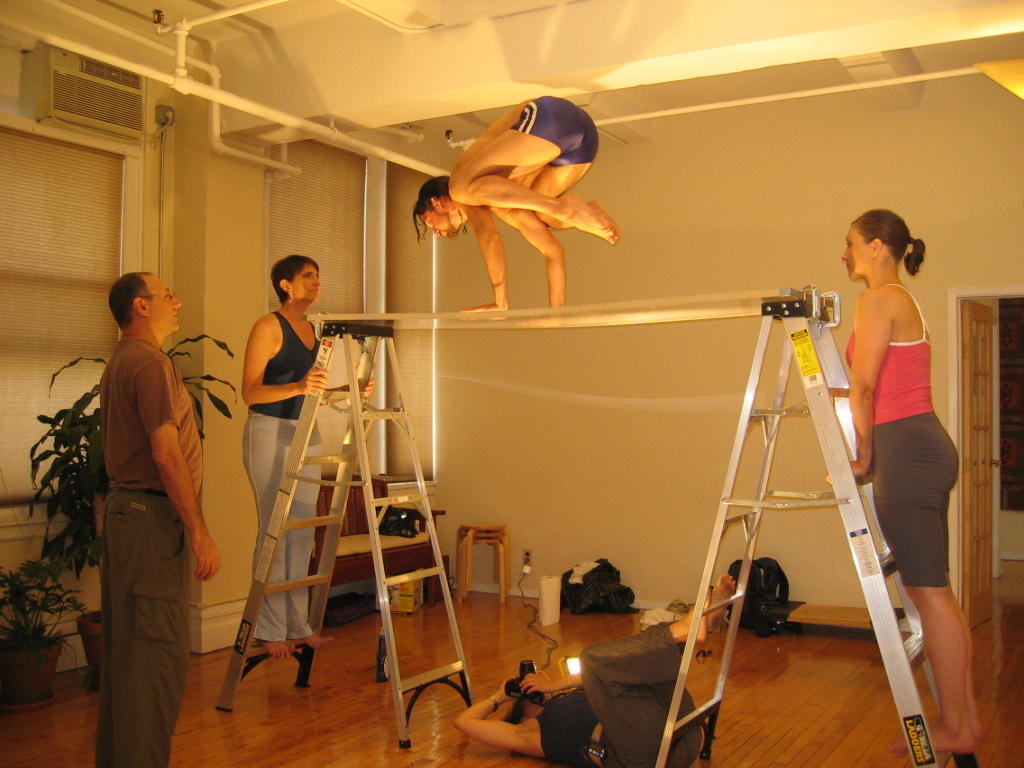
  • Yoga Anatomy photo shoot at The Breathing Project – Fri. 6.24.05

    picture of photo shoot at The Breathing Project
    We had a fantastic shoot yesterday at the studio. My thanks go out to everyone who showed up to help. As you can see, we’ll be showing the poses from some unusual angles.

    from left: Leslie, Janet, Derek (in Bakasana) and Elizabeth with Lydia shooting from underneath the plexiglass.

    FYI, our photographer, Lydia Mann is the multi-talented painter, web designer and artist who designed The Breathing Project’s website, and who has been instrumental in getting the e-Sutra blog launched into cyberspace.

  • The Future of Breathing at Kripalu Sept. 8-11, 2005

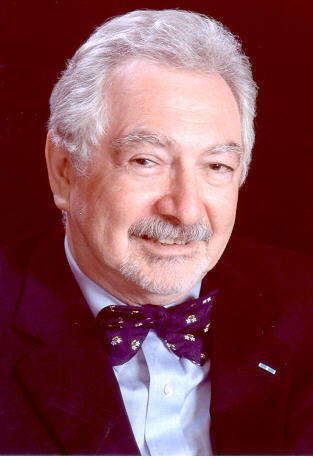
    photo of Dr. Robert Fried, PhDKeynote Address and workshops with
    Robert Fried, PhD Pioneering breath researcher, Author: Breathe Well, Be Well.

    Dr. Fried will present the results of his latest research, as well as reveal for the first time the theme of his new book, “The Metaphysical Breath.”
    Sign up now for “The Future of Breathing”
    at Kripalu Center for Yoga and Health
    September 8th – 11th, 2005

  • Yoga Championships in Pondy

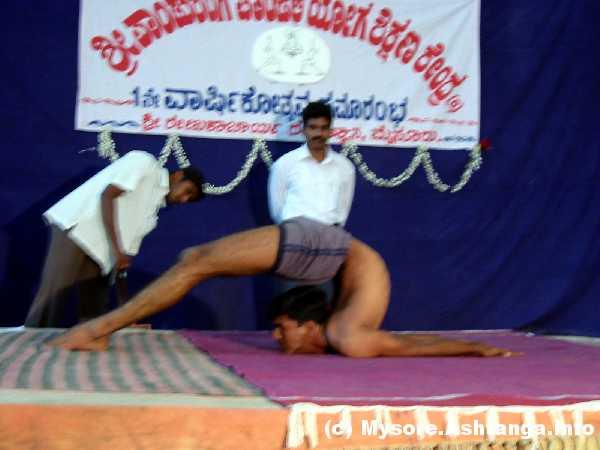
    The second Tamil Nadu state invitation yogasana championship and the 20th Pondy state yogasana championship are to be held in the Union Territory of Pondicherry on August 14 and 15, its organisers said today.
    Here’s our chance to show those Indian yogis that when it comes to being non-competitive, we’re much better at it than they are. FYI, the above photo is from a Mysore competition in January of 2005, not Pondicherry.

  • India vs. West Over Yoga Copyrights

    This could make Bikram’s legal adventures look like small claims court. Apparently, the Indian government is seeking to protect it’s heritage, and to break up what they see as Western monopolies on Yoga and Ayurveda, which is a $27 billion-a-year business in the U.S. alone.
    I REALLY want to hear what the folks at Open Source Yoga Unity have to say about this.

    From the article: “The government is making a digital database of 1,500 yoga postures and their therapeutic properties that can be used to overthrow the 134 patents on yoga accessories, 150 yoga-related copyrights and 2,315 yoga trademarks the U.S. Patent Office has granted so far, sources said.”

    ((LK: So, India is seeking to prevent the granting of trademarks, copyrights and patents on yoga in the future. They hope that the database would also help avoid costly litigation to reverse the rights already granted by appealing to the World Intellectual Property Organization (WIPO). ))
    ……………………………….

    I first heard about this issue back in January of this year – specifically in relation to Ayurvedic herbs and formulas. What follows is an exchange I had with David Frawley (Vamadeva Shastri) after I e-mailed him inquiring about it:

    Jan. 3, 2005
    Namaste Leslie,

    Yes, the multinationals are busy pirating the plant resources of every country they can, particularly in the third world. The government of India has put up some resistance but not a lot. Ayurvedic groups lack the resources to fight back in a strong manner. This has been a problem for some time.

    Of course it is not the only such problem. For example, Coca Cola recently bought out and took over all the major soft drink and bottled water companies in India, hurting many local businesses. But now the government of India requires that Coca Cola is labeled as containing pesticides, which at least in India it does.

    Meanwhile we are busy in the West trademarking, franchising and mass producing Yoga. One wonders what this has to do with real Yoga but it is the commercial era moving blindly ahead.

    Best Wishes,
    Vamadeva

    Jan. 4, 2005
    Hi David.

    Thanks for the prompt reply.

    One point I’d make, in response to your comment: “it is the commercial era moving blindly ahead”

    I don’t think commerce is blind at all. To the contrary, merchants are always looking at a vast and varied market. That’s why there’s a form of “yoga” for every potential “consumer” of yoga.

    If anything, by their very nature in regards to Yoga, it’s the consumer that lacks vision. The way I see it, as long as the market remains free, the cream does rise to the top, and the exploiters, no matter how temporarily successful they may become, will eventually sink to the bottom. After all, how can you enjoy your Roll-Royce collection if you’ve sacrificed your soul in order to acquire it?

    Regards,

    Leslie

    Jan. 6, 2005
    Namaste Leslie,

    You never cease to amaze me with your views.
    If consumerism brings the cream to the top, I suppose that Coca Cola ought to be the most healthy drink in the world.
    In any case, your views at least are thought provoking.

    Best wishes,
    David

    Jan. 6, 2005
    Hi David.

    I’m tickled to think I’m still capable of amazing you.

    C’mon. You know as well as I that Coca-Cola hasn’t been marketed as a health product since the turn of the century, when it did indeed contain cocaine. Back in 1885 it was quite common to use cocaine in patent medicines (which is what Coca-Cola was originally marketed as).

    My internet research reveals that as time went on, the amount of cocaine gradually dwindled, until by 1902 it was as little as 1/400 of a grain of cocaine per ounce of syrup. Coca-Cola didn’t become completely cocaine-free until 1929, but there was scarcely any of the drug left in the drink by then.

    Isn’t Google a wonderful thing?

    (( In any case, your views at least are thought provoking.))

    As are yours.

    Cheers,

    Leslie

  • The Bait and Switch of "Intelligent Design"

    This is an important battle that must be fought with the best intellectual ammunition available. This excellent op-ed provides just that. My sincere thanks go to The Ayn Rand Institute, who gave me permission to reprint this piece in its entirety.
    As a teacher of anatomy, I’ve lately been catching myself using the phrase “designed to…” when I’m describing the function of a body part; e.g. “The foot is DESIGNED to bear the weight of the body…” Instead, I now clearly state: “The foot has EVOLVED to bear the weight of the body…” It’s just one small way I can take a consistent stand against the forces of ignorance.

    The original location of this article is on the ARI website.

    “The Bait and Switch of “Intelligent Design”
    Tuesday, May 3, 2005
    By: Keith Lockitch

    “Intelligent Design” is religion masquerading as science.

    Legal and political battle lines have been drawn across the country over the teaching of “intelligent design”–the view that life is so complex it must be the product of a “higher intelligence.” The central issue under debate is whether “intelligent design” is, in fact, a genuine scientific theory or merely a disguised form of religious advocacy–creationism in camouflage.

    Proponents of “intelligent design” aggressively market their viewpoint as real science, insisting it is not religiously based. Writes one leading advocate, Michael Behe: “The conclusion of intelligent design flows naturally from the data itself–not from sacred books or sectarian beliefs.”

    Proponents of “intelligent design” claim that Darwinian evolution is a fundamentally flawed theory–that there are certain complex features of living organisms evolution simply cannot explain, but which can be explained as the handiwork of an “intelligent designer.”

    Their viewpoint is not religiously based, they insist, because it does not require that the “intelligent designer” be God. “Design,” writes another leading proponent, William Dembski, “requires neither magic nor miracles nor a creator.”

    Indeed, “design” apparently requires surprisingly little of the “designer’s” identity: “Inferences to design,” contends Behe, “do not require that we have a candidate for the role of designer.” According to its advocates, the “designer” responsible for “intelligent design” in biology could be any sort of “creative intelligence” capable of engineering the basic elements of life. Some have even seriously nominated advanced space aliens for the role.

    Their premise seems to be that as long as they don’t explicitly name the “designer”–as long as they allow that the “designer” could be a naturally existing being, a being accessible to scientific study–that this somehow saves their viewpoint from the charge of being inherently religious in character.

    But does it?

    Imagine we discovered an alien on Mars with a penchant for bio-engineering. Could such a natural being fulfill the requirements of an “intelligent designer”?

    It could not. Such a being would not actually account for the complexity that “design” proponents seek to explain. Any natural being capable of “designing” the complex features of earthly life would, on their premises, require its own “designer.” If “design” can be inferred merely from observed complexity, then our purported Martian “designer” would be just another complex being in nature that supposedly cannot be explained without positing another “designer.” One does not explain complexity by dreaming up a new complexity as its cause.

    By the very nature of its approach, “intelligent design” cannot be satisfied with a “designer” who is part of the natural world. Such a “designer” would not answer the basic question its advocates raise: it would not explain biological complexity as such. The only “designer” that would stop their quest for a “design” explanation of complexity is a “designer” about whom one cannot ask any questions or who cannot be subjected to any kind of scientific study–a “designer” that “transcends” nature and its laws–a “designer” not susceptible of rational explanation–in short: a supernatural “designer.”

    Its advertising to the contrary notwithstanding, “intelligent design” is inherently a quest for the supernatural. Only one “candidate for the role of designer” need apply. Dembski himself–even while trying to deny this implication–concedes that “if there is design in biology and cosmology, then that design could not be the work of an evolved intelligence.” It must, he admits, be that of a “transcendent intelligence” to whom he euphemistically refers as “the big G.”

    The supposedly nonreligious theory of “intelligent design” is nothing more than a crusade to peddle religion by giving it the veneer of science–to pretend, as one commentator put it, that “faith in God is something that holds up under the microscope.”

    The insistence of “intelligent design” advocates that they are “agnostic regarding the source of design” is a bait-and-switch. They dangle out the groundless possibility of a “designer” who is susceptible of scientific study–in order to hide their real agenda of promoting faith in the supernatural. Their scientifically accessible “designer” is nothing more than a gateway god–metaphysical marijuana intended to draw students away from natural, scientific explanations and get them hooked on the supernatural.

    No matter how fervently its salesmen wish “intelligent design” to be viewed as cutting-edge science, there is no disguising its true character. It is nothing more than a religiously motivated attack on science, and should be rejected as such.

    Keith Lockitch, Ph.D. in physics, is a junior fellow at the Ayn Rand Institute in Irvine, CA. The Institute promotes the ideas of Ayn Rand–best-selling author of Atlas Shrugged and The Fountainhead and originator of the philosophy of Objectivism.

  • Leslie Kaminoff Interviews T.K.V. Desikachar in Madras, October, 1992

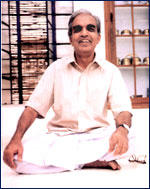
    TKV Desikachar

    Originally posted to e-Sutra on April 24, 1999

    This is an amazing interview, and well worth reading. In it, Desikachar and I talk about a wide range of subjects, including the relationship between Yoga and Hinduism, the view of ego in Yoga, the difficulty in preserving tradition, Patanjali’s view on the inevitability of suffering, and the future of Yoga in America.

    Originally posted to e-Sutra on April 24, 1999

    (Present also were Paul Harvey and Adrianna Rocco.)

    DESIKACHAR: Last week, Leslie invited me to deliver an address at the big Unity in Yoga conference in May of 1993. The theme of the conference appears to be about honoring the people who did so much for Yoga for the last 100 years, and also looking forward to the future of Yoga. I suggested that instead, maybe we can do something here in Madras, as it is easier because we are both here now.
    (laughter)

    LESLIE: So I have prepared a few things…

    DESIKACHAR: Please.

    LESLIE: As you’ve just mentioned, next year in America we’ve chosen to view 1993 as the hundredth anniversary of Yoga in America. The reason for this is that one hundred years ago in September of 1893, Swami Vivekananda presented Vedanta philosophy to a large audience at the World Parliament of Religions. What would you say to the American yogis about the past century of our involvement in Eastern teachings, particularly as it all started with a Vedanta Swami presenting to a parliament of religions.

    DESIKACHAR: Well, I am amazed at this interest. In fact, I didn’t know it was a hundred years ago that our great master Swami Vivekananda went to your country and spoke. All I can say is it reflects upon that interest in America about our great heritage. Having learned so much from the West, I want to thank the West for the interest. Because of their interest, we have learned a lot about our own heritage, so I am very grateful.

    LESLIE: You mention that heritage, yet however there does seem to be a continuing intermixture of Vedanta and Yoga in the way it is presented in the West. There is a Hindu religious association with Yoga that many teachers are promoting, whether implicitly or explicitly. So I’m curious about what you would want people to know regarding the distinction your tradition makes between Yoga and Vedanta.

    DESIKACHAR: When I was an engineer, Leslie, my boss was from Denmark, and we always thought he was an expert in structural design, because he was our boss, and this was a company where we were experts in the construction and design of structures. Today it is the best company in India and I always thought that he was an expert in my field, which is structural engineering.

    So only later I came to know that he was an expert in fisheries! It seems the only way he could come to India was as as an expert in a field where we don’t have experts!
    (laughter)
    So, he got his work permit to come to India and he was our “structural expert”. I never knew he was a fishery man.

    So what I’m trying to say is that when people come to our country from the West, we assume many things – they know a lot about technology – they are experts in computers – they are very good in English – they know everything that the West represents, et cetera. Often with these expectations they try to live up to them, so we can’t blame them because we expect them to be like that. Perhaps they don’t want to disappoint us. I think this works both ways – you know the more ignorant we are the more this happens.

    But the facts do remain that Yoga is a different system, Vedanta is a different system, and there are six such systems based on the Indian heritage called the Vedas, and we don’t deny that Vedanta is one such system with Hinduism, but it is not Yoga.

    I must say again and again that for different reasons, including this stress on Hinduism, the Vedanta Sutras refute Yoga. Because of the attitude Patanjali has about God, for example, creation, etc. ..so Vedanta Sutras refute Yoga. The sutra is “Etena yogah pratyuktah”(V.S. Chap.II, Sec.I, Sutra 3). So there is a clear-cut distinction between Hinduism, Vedanta, and Yoga.

    LESLIE: What is the literal meaning of that sutra?

    DESIKACHAR: “By what we have explained, we have refuted Yoga.” What they have said is that Yoga speaks about Ishvara as a teacher, but Yoga doesn’t say God created this world, Yoga doesn’t say everything goes back to God, Yoga doesn’t say there is one thing and only one thing and that is God Brahma. This word Brahma doesn’t exist in Yoga Sutra, so these are very fundamental issues.

    These issues are important for the Vedantins who believe in the reality of the one Brahma. Yoga doesn’t have even the word, let alone talking about what Brahma is.

    Patanjali’s Yoga talks about Ishvara as a possible entity, maybe the best teacher, the first teacher, but he doesn’t speak of a God who created this world. He only speaks about what we should do with the mind, and if God helps my mind as a point of focus, then O.K., God is fine with me, if God doesn’t help my mind, forget about God, look for something else. This is not easy for a Hindu like me.

    I am surprised that this is not obvious for many people because these presentations are not my presentations, not even my father’s presentations, not even from 100 years ago. Vyasa spoke about that in his Vedanta Sutras (200 A.D.?). This is very important for us to emphasize that Yoga is not Hindu religion. Yoga is a system that helps the mind and Hindus may use it as they have been, and anybody can use it.

    LESLIE: Atheists can use it , Agnostics can use it…

    DESIKACHAR: Yes, yes. J. Krishnamurthi used to practice Yoga. People who reject all systems have practiced Yoga.

    I hope I have made myself clear, and I am sorry for this confusion. My sincere apologies that we Indians have not made this clear.

    LESLIE: A related question also could pertain to the different concepts of ego. There seems to be confusion about the concept of ego both from the Yogic perspective and the Western perspective. Is it possible for you to clarify what is meant in Yoga by the term ego or the term that gets translated as ego, and what role it plays in the process and eventual goal of Yoga?

    DESIKACHAR: Regarding these questions, my reference is Patanjali. I want to make this very clear because that is the text on Yoga. There are thousands of ancient texts on Yoga but the most important text, the most accepted text, the fundamental text on Yoga is Patanjali. So my response is now based on his teachings, the very practical teaching of Patanjali.

    Now, because of the proximity between Patanjali’s speaking and what is known as Samkhya, which is another of our schools, somehow this word ego has entered the field of Yoga. As far as I understand, even if I myself have said it, there is no word called ego in Yoga. The word ego itself does not appear in the Yoga Sutra of Patanjali. Does it ?

    LESLIE: Are you referring to Ahamkara?

    DESIKACHAR: There is no word Ahamkara in Yoga Sutras. You go from the first sutra to the 195th sutra – there is no Ahamkara in the whole Yoga Sutra. Some people have used that word, but it is not Patanjali’s fault.

    LESLIE: Has Vyasa used that word in his commentary…?

    DESIKACHAR: Yes, that is what I mean…some people might have used it…I might have used it, but according to the authority (Patanjali) there is nothing. But there is an interesting concept in Yoga and that is association: I associate myself with certain things.

    For example, “I am the son of a great Yogi, you know,” this is an association. “I am a very educated person.” “I have been teaching Yoga for so many years,” “I am an expert,” and so on. We all have these associations. Now these associations could be good associations or bad associations. For example, I can say, “I am very lucky to have the blessings of my father,” these are also associations. “When I think of him I am nobody, he is so great and I am very small,” this is a type of association.

    So Patanjali talks about these associations, the good associations and the bad associations, Asmita – it is called Asmita. So this Asmita could be good, could be bad. Now often the word Asmita is confused to be ego, so when you study the Yoga Sutras you learn that we have good association and bad association.

    For example, if I am in a state of meditation, I’m completely absorbed in the object of my meditation this also called Asmita. So it is the goal of my life to be in that state. Suppose I have become used to a certain way of behaving, losing my temper, getting irritated, this is also an Asmita because I am strongly associating to some of my bad klesas that are considered not worthy to be kept.

    Patanjali’s very intelligent about this. First, he never used the word ego. Second, he talks about mind only. Mind with good associations and mind with bad associations. One is desirable, one is not desirable. So in Yoga we don’t even have this problem.

    LESLIE: So, Yoga would speak merely of a collection of associations between the mind and some objects, but not a distinct identity or entity in and of itself which can be isolated as an ego. Am I understanding correctly?

    DESIKACHAR: I don’t think ego can be just taken out of my pocket and kept here. I would like to see a demonstration where ego can be taken out of my pocket and kept –”This is my ego.” Because the word Ahamkara itself was defined by my father as “where something that is not me is considered as me.”

    According to this, to understand ego I have to understand myself. I have to understand what is not myself. How many people have the good fortune to understand that? So without understanding that, how can I even take it out of my pocket and throw it anywhere?

    So in Yoga we are not worried about this question. We are quite happy that we don’t have an ego problem!
    (laughter)

    LESLIE: That having been clarified, what then does the Yoga of Patanjali have to say about the nature of an individual’s identity?

    DESIKACHAR: Yes, that is possible. We have identity and these identities are associated with what has happened to us in the past and what we think about ourselves. How far this identity really represents my true nature – that is basically a peaceful nature, a state of being where there is some happiness, where I am clear about things – I don’t know. So identities could be two: wrong identity and right identity.

    LESLIE: And the right identity is basically…

    DESIKACHAR: Yes…wrong identity for example is for me to assume that because I speak English, I have been to a technical education, I am very smart in public relationships, and I have a lot of students, I begin to believe that maybe I am even better than my father. After all, he did not go to engineering college, he did not speak English, he does not have as many students as I have, he never went abroad like I did and he doesn’t have the fat bank account that I have, so he is nowhere near me. This is a false identity .

    LESLIE: Aren’t you glad I wont quote that out of context?!
    (laughter)

    DESIKACHAR: You can do anything because it is in black and white and I have no ego problem.
    (laughter)

    LESLIE: Well, speaking of ego problems, in your broad experience these last 20 or 30 years teaching both Western and Indian students one-on-one, have you found that the concept of surrendering the ego is helpful or harmful for people when they get the notion that surrendering is something that will bring them peace?

    DESIKACHAR: Many people have tried it. It has not worked.
    (laughter)
    The problem, whether it is Indians or others, is because, “What is it that I am surrendering? I don’t even know what I am surrendering!”

    If it is my army, I know. It is like in a war when what happens is we surrender to the winner. So, we take the sword or the gun and we place it at the feet of the other man.

    LESLIE: That’s clear…

    DESIKACHAR: Yes, you can take a photograph or a video like in Bangladesh. We often saw how the Pakistani army had to surrender to the Indians. We have that in war, but even then it is not clear sometimes.

    This is not a very happy situation and I’m sorry if people are trying to surrender and then feel bad about it because first, they don’t know what they are surrendering and secondly they feel they have surrendered. You cannot really verbalize these phenomena because it is something much deeper.

    Let me give you an example. Some of my friends have promised to give up coffee. I also do semi-medical work as you know Leslie, where we advise people about a few things and for example in some cases we say, “Maybe you have such a bad liver and you must give up coffee because it has side effects.” So they say, “Sir, when you say it is for my own health I am ready to do anything! I am so sick I am ready to give up anything!” I say, ” Oh please if you can’t give up don’t give up because I am a very practical person.” They reply, “Yes, no problem sir. I can give up!” The next day they tell their family, “No more coffee!”

    One or two days go by and then you know what happens? The smell of coffee pulling you – and everybody’s taking coffee – and people even offer you coffee – and you want the coffee –- but then you have given it up! So you see for one day, two days, three days, you succeeded to give it up, but slowly, even before you realize it, coffee is coming to you and then you finally take the coffee. Now you feel like a thief taking your own cup of coffee!

    What a shame that you have to feel like a thief taking your own cup of coffee!

    Then you go and meet the teacher and he says, “So, no coffee?” Now you have two choices. One is you tell a lie and feel bad about it, or two is you tell the truth and feel bad about it. So many times people feel so bad. Not because I asked them to give up coffee – they wanted to give up – but they just couldn’t.

    So the question of surrendering is like this. I must very much inside be prepared for this to happen. It is not simply like giving up a blank sheet of paper – it is not possible. This is why in India great teachers like my father have said the act of surrender is the last stage of a person’s life. It is called Prapatti.

    Prapatti is not possible for a young boy. One has to go through a lot of evolution – one has to suffer a lot – one has to experience life – one has to enjoy life, and then one has to build up devotion. Then, maybe at the end of the whole story, maybe surrendering is finally possible. So it’s a long project. It’s not a one-day project for that to be really an act of surrender.

    LESLIE: I guess you must actually have something there that you have contacted in your life in order to give it up.

    DESIKACHAR: Yes. Well, as you said the other day, “I can only give up what I have and what I know.” If I don’t have it and I don’t know, my giving up is a false thing like when the politicians say they are not corrupt – it is not true.
    (laughter)

    LESLIE: So if we were to make a radical statement here, could we say then that a useful way for people to practice Yoga would be for the purpose of creating a strong, integrated ego or identity?

    DESIKACHAR: Without using the word ego, because I know very little about that.

    LESLIE: Identity perhaps then.

    DESIKACHAR: All I want to say is; “I must know something about myself before I know what I’m doing with myself.” That I would say.

    LESLIE: This reminds me of a discussion Paul (Harvey) and I were having last evening. The question we wanted to ask you is this; “Do you feel that in the West the role of Yoga is emphasizing or needs to emphasize wholeness rather than transcendence?”

    Since the topic of this interview is the future of Yoga, would you like to see Yoga teachers in the future more be understanding of this need for developing an integrated identity?

    DESIKACHAR: What I would like to say about this is to confess that I don’t have the authority to say what is the best thing for the West. I am from India, and I can only speak for myself.  I can say what Yoga has done to me.

    Yoga has helped me to discover my tradition, both the greatness and the weakness of my tradition. Yoga has helped me to know something about myself – my good side and my bad side. Yoga has also helped bring me to my teacher. Because I cannot say Yoga is something I could have picked up myself. I had the help of a great teacher. My associations with my teacher include having stayed with him, lived with him, washed him, and learned from him.

    What Yoga has also done is reduced to some extent my bad side and it has really given some hope that I have a good side. It also has made me happy to learn that my Indian tradition is very great. It has a lot of good things and I also know a lot of things of my tradition have no relevance today.

    This is my discovery through Yoga. How can I answer what Yoga can do for the West? Only the West can answer this.

    LESLIE: What are some of the things you’ve discovered about your tradition don’t seem to be useful for you, and what do you think of the notion of preserving a tradition primarily because it is old?

    DESIKACHAR: For example, the type of discipline my father went through I am unable to do. Obviously the faculties he had, I don’t have and probably will never have. At 90 years what he could do with his body…I don’t think I’m able to do it now!

    So also, the way he would express his devotion to his God –- sitting and offering his prayers for hours – I am not able to do this because my life is so different from his. While I respect him, I don’t live like him.

    Between my father and myself, there is a gap of 50 years, and Yoga is a very old tradition – at least 1000 years, so how can I claim to represent the Patanjali Sutras when I cannot even represent my own teacher?

    So many things that he expressed through his life are not possible for me. Many things that he did are irrelevant to me. He spoke in Sanskrit and I speak in English. Look at these simple things: I used to sit on the floor with him – I am sitting with you across the table. So things are changed and that is what he always said: “Things are changing – many things, many things.”

    You see my father’s photograph – he would always have his mark on his forehead, he had a tuft, he would wear a shirt only when it was very cold. I don’t have a forehead mark. It doesn’t make any sense to me – I don’t have a tuft because I never had one and I’m 90% Westerner compared to my father. I wear Western clothes, I speak English. So it’s clear much has changed though I have lot of respect for the tradition, the details of tradition have lost their meaning.

    When I see my colleagues and my students it is important to remember that something like this always happens even within India. So, I am now giving you a model where here is a father, a son and student, and there is a lot of irrelevance at every stage. At the same time, there is something constant – that is, we want to improve ourselves and we want to learn something about our tradition. There’s something good here, and probably we can help people through this tradition, but not in words, not necessarily even in deeds, but in spirit.

    Regarding preserving traditions, I don’t understand how I can preserve the tradition of my grandfather because I have a few palm leaves on which my father’s father had written some words in a language I don’t understand. My father would read them, cherish them, and he would keep them very carefully. This is something he had received from his father, and now I have kept it, but it doesn’t make any sense to me, you know, so I cannot keep this tradition.

    There is a sheet a paper in which a beautiful verse is written in the way of my father. He kept it alive by reciting it, meditating on it. Now I am just keeping the sheet of paper, and in fact, if you ask me where it is, I would have to say please give me three days because I have to search for it.

    So how can the present preserve the past? I don’t understand –- I can only, as has been said,  protect the container. Paul was giving the beautiful example of a container, and preserving the dead container very beautifully. What is inside, I don’t know and I don’t even know if something exists inside, so what is it I am preserving if it is an empty vessel? Preserving the container without the contents is like a museum. You know I am not talking about archaeologists, I am talking as a living person – a person who is living in the present.

    LESLIE: That’s a very good analogy. I think many people have become cultural, religious, or Yogic archaeologists rather than people who are capable of creating something by themselves in the present. I’m assuming that what was available to the rishis, or the great teachers of the past is still available now at this moment through our own creative efforts.

    DESIKACHAR: Yes – that is the basic idea of Parampara. Parampara is to maintain continuous deeds from the past to the future – not by making my ancestors alive – because it is not possible, my ancestors are dead, and I am going to soon be dead. So how to continue the sutra, the thread that was there – that is there – and will be there. That is Parampara.

    So the thread is that man is suffering, man is looking for peace – that is the thread. How to make him suffer less – what will help him is for us to find according to the situation. We are a certain way in India – in the West, maybe it is different, so that you cannot help. This tradition of human suffering and seeking happiness will continue, whether we preserve or not, it will always be there, but what I do with that is for me to decide.

    LESLIE: Is that how you would describe what does remain constant as the spirit of the teachings?

    DESIKACHAR: My ancestors, myself, and hopefully my children and grandchildren will have something in common. They were concerned about some human problems.

    They spoke about Dukha (suffering). They spoke about Dukha so many thousands of years ago, now we speak about, it and still tomorrow we’ll speak about it. So, these are constants. This need for a person to be happy – this need for a person not to have suffering is a constant thing. Then the details arise out of what has to be done – what means are to be to employed according to the present situation.

    LESLIE: You just mentioned the seeking of happiness and the avoiding of suffering. Now, to me, those seem to be two distinct motivations. Is there a way of seeking happiness for its own sake – not as an avoidance of what is unpleasant or intolerable in our lives?

    DESIKACHAR: With due respects to what you are saying the way I have understood Yoga Sutra is as follows:

    Yoga Sutra is an extraordinary text for people like us – ordinary people. Yoga Sutra is taking a lot of trouble to explain how we cannot help but suffer, how we cannot escape suffering. No matter which way you go, on this side or that side it will hit you. If you read the second chapter (Y.S. II-15), how because of my own condition – because of evolution – because of my desires – because of the nature of change, there will be guaranteed Dukha. “Sarvam dukham vivekinaha.” That is to say the more you seek clarity, the more you will find Dukha! Sorry about this –- Patanjali is very much concerned about Dukha.

    LESLIE: What is underneath it all? Which stuff is the basic nature? In consciousness there is no Dukha, just Ananda…

    (…cuts in)
    DESIKACHAR: …What do I know about basic nature!? If somebody told me there is a pot of gold under my house, but I don’t even know where my house is, what good is that? Now I suffer more because before, I didn’t even know about the gold, and now somebody comes and tells me: “You’ve got a pot of gold – go and dig it up!” If I don’t even know where my house is, maybe I am suffering more because of this pot of gold.

    LESLIE: That is a brilliant analogy. I can see that is the dilemma of most people who…

    (…cuts in again)
    DESIKACHAR: …It is not a dilemma – it is a fact! The more I tell you: “There is something deep inside you that is always happy…there is always Ananda…you are that Ananda…your true nature is Ananda…” it makes you feel much worse!

    LESLIE: OK, well, let me rephrase that then…

    DESIKACHAR: I hope you forgive my bad English…

    LESLIE: No…no…if anything, it’s too clear! Sticking to Patanjali and Yoga then, the question is as follows: “Is true happiness possible for human beings on this earth in this reality in this body?

    DESIKACHAR: Happiness is relative, no? Let me give you an example. There was a couple – a very happy couple, two very good children – very happy. They became interested in spirituality so they went to hear a speaker and they liked the speaker. So they thought they will have a darshan and interview with this master.

    They went to this master whom they have so much reverence for, and this master said, “Who are you?” So the husband said, “I am so and so, and this is my wife.” “What!? You are married!? What a pity!” said the master.

    Three years later the marriage broke up. Now I don’t know whether they were unhappy when they were together, or if they are unhappy now. What I mean is these are the people who were very, very happy – then they became unhappy.

    So happiness and suffering are relative terms, and I don’t think you can measure it. That’s why the definition of Dukha is how we feel when there is no barometer.

    So much money, so many hours of sleep, this is not what makes a person happy or unhappy – it is how I feel. Rich people are often unhappy, and I saw recently in Tibet how those people are…so happy! (D. had recently returned from a pilgrimage to Mount Kailash and Lake Mansarovar in search of the hidden ashram where his father supposedly lived for 7 years with his teacher, Rama Mohana Bramachari.)

    Leslie, you must go to northern Tibet! They have no extra clothes, they are dirty, they don’t have toilets, they don’t have television, they eat just some flour – barley flour – and some water with tea…and they’re so happy! I think if you bring them here, in two days they will become unhappy. As my father said, happiness and sadness are experiences that only I feel.

    I often see people unhappy, and I say, “How can you be unhappy?” They say, “How can you understand my suffering?” So happiness is a subjective experience. Sadness is also, and they are relative. That’s why often when I go to the West I am stunned because they have everything that we don’t have. Why are they sometimes saying, “Oh? I am not happy!” And they don’t know how to smile – I don’t understand! I am a fool because I don’t understand why these most developed countries can be so miserably unhappy.

    Having seen Tibet I understand more now, before I start talking about some logic. How happy those men and women were! So, if happiness is not based on what I have, and my feelings are relative, then in brief, Dukha and Sukha are relative terms.

    LESLIE: What is beyond this dilemma of Sukha and Dukha? Patanjali, although he may have been accused of being an atheist, hasn’t to my knowledge been accused of being a pessimist!

    So sticking with that idea then, how would you describe what is available through Yoga apart from this constant gap between Sukha and Dukha?

    DESIKACHAR: Well, this is a big question, and I agree that Patanjali uses Dukha as the first step towards happiness. That is his strategy: “There is going to be Dukha. Don’t feel ashamed of that because that is going to take you to a place where you may have less Dukha!”

    This is the fantastic idea of Patanjali – that there is nothing to be ashamed of! It is the best thing that can happen to me – the moment I recognize I am in trouble! Thus, I want to agree with you and emphasize this.

    What is the second question? What can Yoga do?

    LESLIE: Well, relating the question to the theme we’ve developed, let’s say that someone has managed to develop a sense of wholeness – an integrated identity. Then, in Yogic terms, how you describe that person’s experience of happiness in this world? Is this the idea of Kaivalya?

    DESIKACHAR: Patanjali has never described these things. He’s struggled to explain how difficult it is for him to describe Kaivalya – the word you mentioned so, I repeat it.

    He’s trying to describe that in so many ways –- every chapter he’s trying to say something about Kaivalya in so many ways. This means that he has difficulty to properly describe that state. So how can I describe it?

    What he has said somewhere is that: “I know a person is happy or not by the way he feels when others are happy, and the way he feels when others are unhappy.” (YS I:33)

    It’s an important idea. So a happy man is not going around saying, “I am happy! I am happy!” But, by his own emotions in relation to what is happening to other people’s happiness or unhappiness, then perhaps we can tell this man is a blessed person.

    LESLIE: So the best we can say is that this Kaivalya can only be known by it’s effects, and how we can observe the way a person is living their life…

    DESIKACHAR: As my father said: “The moment I say I am a Yogi – I am not a Yogi!” That’s what he said, and I quote my father exactly.

    LESLIE: Well, it seems what is also dangerous is the other side of that equation. That is, when other people call you a Yogi and you believe them. People seem to have a need to find somebody to whom they can give up a certain amount of responsibility. We see this happening very much in Yoga.

    DESIKACHAR: You see it?! I am on the receiving end!
    (laughter)

    LESLIE: Yes, and I’ve always admired the skillful way you deflect that sort of behavior – bouncing it back. It is a real skill. Historically, some of the wisest people have been tripped up by the projections of their students and it seems to me that we’ve seen a lot of this happening in the West. I don’t know of any major teachers who have completely escaped this problem to one degree or another.

    Do you see this as a function of the confusion between Yoga and Vedanta, or is this just basic human nature?

    DESIKACHAR: We are all human beings – we like appreciation.

    LESLIE: This is another of Paul’s questions: “What is the role of Kaivalya and Moksha for us in the West?”

    DESIKACHAR: Well, you have to answer that question for yourselves anyway, so…
    (laughter)
    Actually, I think the main objective of Yoga is to know about myself – my culture, what we call Swadharma. I think Yoga helps me to identify and learn Swadharma. The question of Moksha and Kaivalya is for when I have transcended Swadharma – so, I think the question is far-fetched until I understand myself…what I am.  I must not feel ashamed of that.

    Also, it takes some time to feel not ashamed of what I am because I can’t help being what I am, and often we feel ashamed because we compare. So the important thing is, let us first go through all that, and then I’ll tell you, my Indians, as well as myself, “We’ll cross the bridge of Moksha when we get to it.”

    LESLIE: So we’re back to that same issue – the real work that’s ahead of us; the work of building strong, integrated wholeness…identities. Knowing who we are, not trying to skip steps, or in some way contact another dimension separate from the reality we live in, where somehow our suffering is going to disappear.

    DESIKACHAR: Some problems will always be there. I won’t say suffering will disappear – some contributing factors and some problems will be reduced.

    LESLIE: Do you feel that some problems will be increased, or some new problems will appear? Can you give some examples?

    DESIKACHAR: Yes. You know, discovering my own tradition – something about myself – is not always a pleasure. Suppose (as I had I found) that there is so much to be known about my tradition…that I want to know…and I need to find some source where I can go and learn. If I don’t find it, I am really unhappy. This is a problem.

    Then I find about myself that I have certain characteristics which are not desirable, and I would like to find a means to reduce these characteristics. If I don’t find the means, I will be unhappy. So, it is a part of our growth. I am not saying that by discovering my tradition – my Dharma – that I am going to be permanently happy. All I can say is, at least I am more realistic about myself. Then, I am not in somebody else’s territory – I am in my own territory. This, you know, is not what I would call freedom from suffering, but it is definitely freedom from Vikalpa (imagination replacing comprehension).

    LESLIE: You told me once, that what you learned from your father was really only half the picture, and the other half had to do with what you’ve learned from your students Since your father has now passed away, and he was your teacher for so long, that first half – your father – is no longer present. Where do you turn now to continue your growth and your learning?

    DESIKACHAR: Actually, I was lucky. I became a teacher almost the same time I became a student, so I made lot of mistakes as a teacher, but people were very nice. In fact, one of the first things my father did before he asked me to teach, was he first asked me to watch his teaching. Then he would supervise my teaching. It helped me, and I made mistakes, which he corrected.

    I accepted that, so I have to acknowledge gratefully both the parties. I had a fantastic situation with lots of feedback. So, here I was, practicing, learning something from father, and I was also teaching at the same time. I fumbled a lot, and I had new questions from that, so I had to go back to him. So this system helped me.

    If I have learned so much from my father, it is because I was in front of my students, and if I learned so much from my students it was only because I had something to give them from my father. I’ve been really lucky because of this situation being there right from the beginning, and it continues with the students now.

    LESLIE: Now that he’s not here, I know you have said that sometimes all you have to do is focus on him, or his image, and an answer comes. Do you also think of what he would do in a particular situation?

    DESIKACHAR: Many things happen. For example, I would not say that I have the capacity to do things the way he would do, nor can I say I would do the style he would do. With all respects, neither would I say that what he would do is what I would like to do. This is because of certain things about the West, for example, or about specific ways of communicating. So, I take some clues from him, and that clue comes to me because of my strong association with him. These days, I don’t feel that he’s far from me. Anyway, I never missed him before – even when I was very far from my house. Somehow it happens that way.

    LESLIE: That association that you are referring to leads me to another consideration, and this is the importance of the individual relationship between the teacher and the student.

    In your approach to yoga in particular, this has been made very clear. Would it be fair to say that in the future, you would like to see more of an acknowledgement of the importance of that association to the individualized nature of Yoga teaching?

    DESIKACHAR: This is a very difficult question because of the numbers involved. We learn when we are with a group. At this moment, we are a group of four. I understand the importance of groups and I know what I am saying now may go to many people I don’t know, so I am aware of that. Suppose you turn the tape recorder off, and ask the same question. For you Leslie, I would not say it the same way, but now there is this consideration. So both have their value.

    LESLIE: I can see that you’re taking the nature of my question into consideration in answering it because of who I am as an individual! So in other words, you’re not the kind of person who could make a general statement that’s intended to be true for everybody or a large group of people.

    DESIKACHAR: That is not easy to do, because I would have to be a Buddha or Patanjali!
    (laughter)
    This is very difficult. I am scared when I give the lectures! It scares me – everybody taking notes, you see Paul is taking notes!
    (laughter)
    It scares me because they think I represent a great teaching. How can I claim that? There are people who are very serious – it’s not a very pleasant situation to be where I am, so I am always very careful, and I always pray God to forgive my mistakes. But when I’m alone with Paul, I know I have nothing to worry, no acts to put on – he can always come back and say, “What is that you said?” I can say, “You were right Paul, I was wrong!” I can’t do that when I meet somebody casually for two hours and go away!

    That’s what I was telling Adrianna (Rocco): “What business have I to come to Italy? I don’t do any good… I only confuse people, then I pack and run!”
    (laughter)
    I told her this – we had long discussion about this, so perhaps there is some message that can be delivered in a very, very light way to a group…but each individual? Look at you three! You smile, she smiles, Paul hardly smiles!
    (laughter)
    Three people who I know! They are different in front of me! So what about the strangers? So its a tough job!
    (laughter)

    LESLIE: Here’s an even tougher one. Let’s just say that through some magic, this microphone is hooked into the future, and it’s next year at our 100th Anniversary of Yoga in America celebration. Is there something very, very mild you could say now that would be heard by this group of 500 Yoga teachers and students? Is there anything that you would feel safe about saying to them concerning the future of Yoga?

    DESIKACHAR: I think the future of the Yoga is in the hands of those people who are concerned about the future of Yoga! People like you, for example. Now you are the people and, to some extent we are the people. We (Indian teachers) are the people who spoke about Yoga. We are the people who opened the eyes and ears and minds of people to Yoga first. We must accept this.

    Oh, it is a big responsibility! And then when we speak about the future of Yoga, we are talking about the future of Man. This is very important – we are not talking about the tradition of Yoga for the future – we are concerned about the future of Man. So, if Yoga has to contribute to the future, it should contribute to the future of Man.

    Speaking in Madras, in my own culture, I cannot envision the future of the United States –- it is very difficult. All I would say is, the future of Yoga is safe in the hands of those people who are concerned about the future of Man.

    Man is one word, but the man of Italy is different from the man of the United States, and definitely different from England! So these people who are concerned about the future of Man also must know that this is a different culture, different traditions. As an Indian, I may not be able to do justice to the future of America. So, I always feel that the future of Yoga in America is safer in the hands of Americans. Perhaps much more so than in my hands, because I am a stranger to America.

    My culture is different than America’s. Even when I know so much about the West, I am very much an Indian in my heart. This is all I would say:

    “Let the future of American Yoga be in the hands of those Americans who are concerned about the future of Man!”

  • Asana Lab image- Ardha Matsyendrasana


    This is an image that came out of the Asana Lab I conducted on Friday, May 20th.
    It was created on a whiteboard onto which I project video images of students in various asanas – in this case, half spinal twist.
    The blue lines were traced over the starting position of the pose, and the orange, lighter, lines were traced over the pose after some simple breathing directions. The point of the exercise was to show how the twist could be deepened from within by the breath – rather than imposing the twist on the body using the external leverage of the arms.
    The resulting image was quite beautiful, so I photgraphed it to share with you. (Many thanks to Gail Ogden for retouching the photo.)