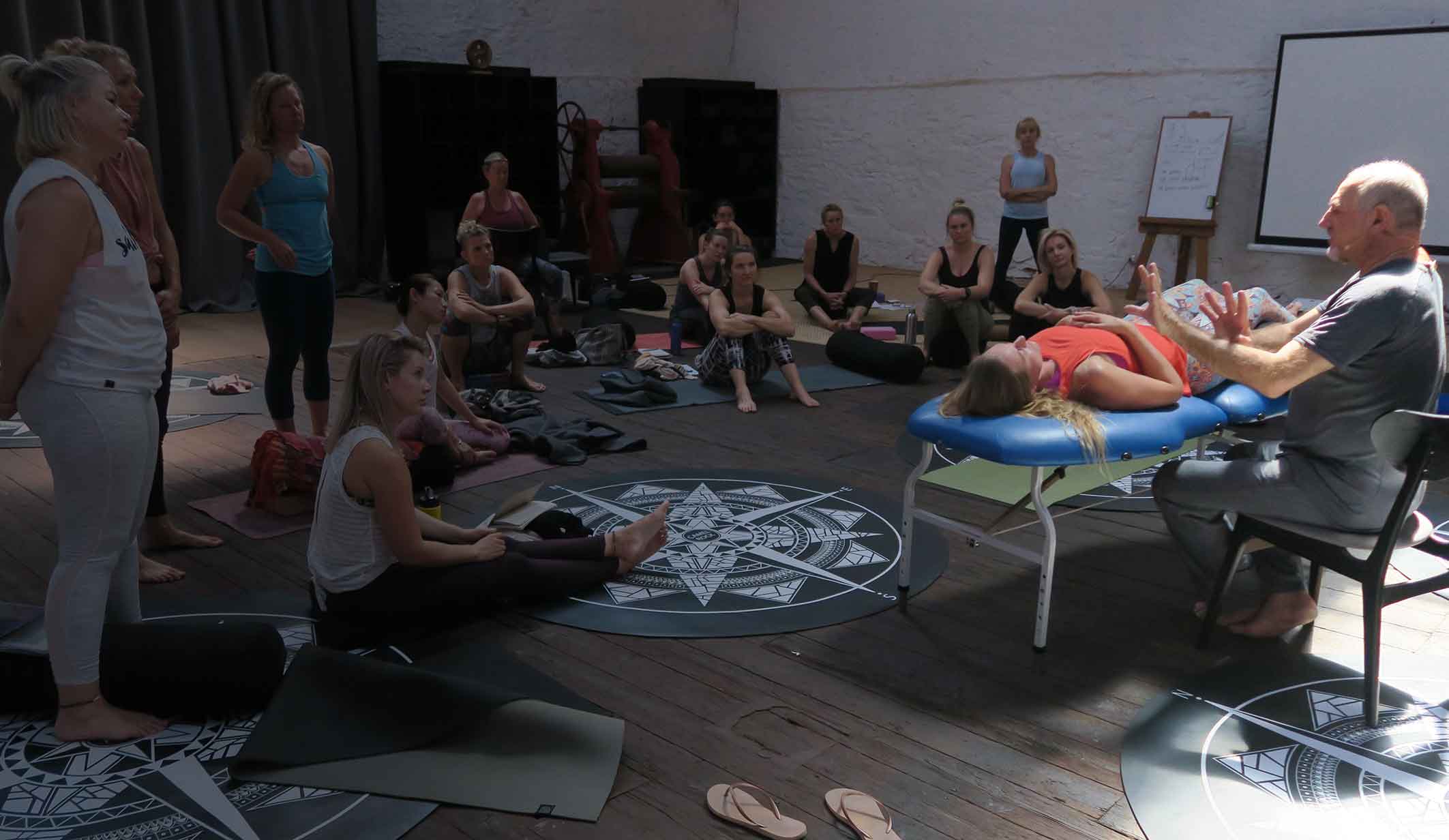
 I am very pleased to announce that The Breathing Project is hosting my teacher’s wife, Menaka Desikachar, senior teacher at The Krishnamacharya Yoga Mandiram, for a day of special events on Tuesday, September 20, 2005.
These events are part of a world tour, which will raise funds for a new, state-of-the-art KYM facility in Chennai, South India—to keep the message of Krishnamacharya vital and accessible to all.
Menaka will be joined by Radha Sundararajan to teach a 3-hour workshop from 2-5pm called “The Yoga of Sound.” The donation for the workshop is $125. From 7-8:30pm, they will present a Vedic Chanting Concert of Ancient Healing Chants. The donation for the concert is $20. All donations are tax deductible.
Space is limited, and these very special events are sure to sell out. e-mail Jen Harris to register, or for more information.
Blog
-
Breathing Project to Host Meneka Desikachar for KYM Building Fund Benefit
-
Celebrating the Breath, an Interview with Leslie Kaminoff
 This is an interview I did for the Summer Kripalu catalogue. It contains some of my personal history relating to my beginnings in Yoga, and my interest in breathing. I was quite pleased with the way it turned out, although I don’t think the photo is very flattering.
What first got you interested in the breath and breathing?
I had been teaching yoga for about three years and I was talking to a good friend of mine, Larry Payne. He had just returned from a trip to India to study with the top yoga masters. He had been most impressed by the teachings of T.K.V. Desikachar in Madras; I asked him what made that approach so special. He said only five words to me: “It’s all in the breath.”
Those words made such an impression that by the time I met Desikachar in 1987, I had been engaged in a 5-year inquiry about the role of breathing in yoga practice…If you could share one idea about the breath, what would it be?
That there’s no right way to breathe. The goal of yoga and breath training is to get the breath freed up; and if you want to be free, the first thing you have to get over is the notion of trying to get it right.
What is the mission of the Breathing Project?To educate yoga teachers and the general public about the role of the breath in health, well-being, and spiritual awareness. We teach advanced studies programs, sponsor charitably funded community yoga classes, and have a regular schedule of breath-centered group yoga classes featuring some of the finest teachers in New York City. We also have a studio, run by my wife, Uma, in South Egremont, Massachusetts called The Berkshire Breathing Project that has a full schedule of classes and advanced studies programs.
Tell us about your first yoga class.
My dad was studying yoga at the Sivananda Yoga Vedanta Center here in the city, and he invited me to a class. It was 1978. I was 20 years old and already living on my own in the East Village. What I remember most was the feeling of complete relaxation in the final shavasana at the end of class. It was a completely new and transformational experience for me. Soon after that, I signed up for a beginner’s course and by the next summer I was taking the Sivananda teacher training course in Canada. Within two years, I was an initiated swami, running the Los Angeles Sivananda Yoga Center on Sunset Strip. You see, a little relaxation can be a dangerous thing.
-
Larry Payne’s New Yoga Rx Therapy Certificate Program at Loyola Marymount University in L.A.
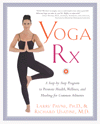
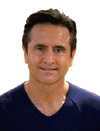 I am very pleased to announce that I am teaming up with my old friend Larry Payne teach a unique certification program that’s being offered through the Loyola Marymount University Extension Program in Los Angeles.
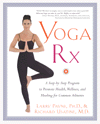
I will be teaching the anatomy component of the Yoga Rx Therapy training. The program is a marriage between Yoga therapy and complementary medicine. It is designed to train Yoga teachers to be Yoga therapists and apply classical applications of Yoga for use in clinical settings to help treat common ailments and conditions.
Click here to read an article in The Palisadian Post about Larry and the program.
Here is the link to the program on LMU’s website.
Please note that my Yoga Anatomy classes, which will take place over two weekends (November 12 and 13 and December 3 and 4, 2005) are open to all Yoga students and health professionals, without having to enroll in the whole certification.
Here is a complete description of the program:
Yoga Rx Therapy Certificate Program
LMU Extension, Loyola Marymount University
Course Description
Yoga Rx Therapy is a marriage between Yoga therapy and complementary
medicine. It is designed to train Yoga teachers to be Yoga therapists and
apply classical applications of Yoga for use in clinical settings to help
treat common ailments and conditions.
The level I course will focus on the musculoskeletal system. Students will
meet one weekend a month for a year and address principles of practice,
anatomy for yoga teachers, the origin and treatment of common low back,
upper back, knee and hip problems. In addition the course will cover
communication tools for working with doctors including reading reports,
terminology and clinical notes such as S.O.A.P. notes.
Participants who complete and pass the course will be equipped to work with
various medical specialists, chiropractors, osteopaths and physical
therapists. They will also receive a certificate from Loyola Marymount
University and 22 units of continuing education credit.
The optional level II course will be offered the following year and will
focus in the same manner on other systems of the body as outlined in Yoga
Rx (Broadway Books) written by Larry Payne, Ph.D., and Richard Usatine,
M.D. These systems will include the circulatory, respiratory, digestive,
nervous, reproductive and endocrine systems.
Certification Requirements
Students seeking certification at level I or II will be required to attend
all courses, satisfactorily complete homework assignments and achieve
passing grades on all exams. Any exceptions such as make up hours or exams
are at the discretion of the staff or teachers. Certification at level I is
required to attend level II.
Fees
The tuition for the Level I course with 110 hours is $1,875.
The tuition for the Level II course with 110 hours is $1,875.
The Anatomy for Yoga Teachers segment is open to all participants,
including those not enrolled in the course. The tuition for non-enrollees
is $330 for the two weekend, 20-hour course. Students who want to simply
audit the Level I or II course pay the same fees and will be accepted if
space is available.
Prerequisites
Participants in the certification course are required to have completed a
200-hour Yoga teacher’s course or its equivalent in seminars, workshops,
private or supervised group classes. All applicants are required to enclose
three letters of recommendation including at least one Yoga teacher and one
health professional. Any questionable application will be reviewed on an
individual basis.
Location of Classes
Loyola Marymount University
One LMU Drive, Suite 1840
Los Angeles, CA 90045
Classrooms will be selected based on size needed and availability
Applications
Applications are available by contacting Nicole de Picciotto, Coordinator
Yoga Philosophy Program Center for Religion & Spirituality
Loyola Marymount University
One LMU Drive, Suite 1840
Los Angeles, CA 90045
Course Size
The level I course and II course are each limited to 30 participants on a
first-come basis. A weighted standby list will be used if necessary.
Bios for Staff and Guest Instructors
Larry Payne is co-founder and director of the Yoga Rx Therapy program. He
is co-author of Yoga Rx with Richard Usatine, M.D., and Yoga for Dummies
with Georg Feuerstein, Ph.D.. He previously introduced Yoga to the
curriculum at the UCLA School of Medicine, and was founding president of
the International Association of Yoga Therapists.
Christopher Chapple, Ph.D., co-founder of the Yoga Rx Therapy program, is a
professor of theology and Associate Academic Vice-President of LMU
Extension at Loyola Marymount University. He has authored and edited 12
books on religious traditions of India, including a co-translation of
Patanjali’s Yoga Sutras.
Richard Usatine, M.D. is the Vice-Chair for Education in the Department of
Family and Community Medicine at the University of Texas at San Antonio. He
is also the recipient of the National Humanism in Medicine award and, since
2000, chosen by his peers each year to be included in the Best Doctors in
America list, a national consumer reference source published by Ohio State
University.
Rick Morris, D.C. is a sports medicine chiropractor with more than 25 years
experience and team doctor for the US Olympic Medical Team, The NBA, and
UCLA Track and Field. He is also a senior instructor at the Cleveland
Chiropractic College in Los Angeles.
Kathryn Gil, M.D. is a Brown University medical school graduate, trained in
residency at UCLA with more than 20 years experience in allopathic and
traditional osteopathic medicine. She is also a clinical professor at The
Western University of Health Sciences.
David Allen, M.D. is a graduate of UCLA Medical School, and also holds a
masters degree from the College of Chinese Medicine and Acupuncture,
Oxford, England. He is the medical director of the Longevity Center, one of
Los Angeles’s most prestigious integrative medicine centers.
Chase Bossart, CYT, is a 14-year student of TKV Desikachar, including 3
years of residential internship in Chennai. He is co-founder of the Yoga
Health Alliance and currently finishing a Masters degree in Religious
Studies at the University of California, Santa Barbara.
Art Brownstein, M.D., is an Assistant Clinical Professor of Medicine at
John A. Burns School of Medicine, University of Hawaii and a staff primary
care physician at the Kauai Medical Clinic, Wilcox Hospital. He is the
author of “Healing Back Pain Naturally” (Harbor Press), and Extraordinary
Healing: (Harbor Press), He is the only U.S. physician to be certified in
Yoga by the Government of India, Ministry of Health and Education.
Shri K. Mishra, M.D., is trained in Yoga, Ayurveda and modern medicine. He
is professor of Neurology, and coordinator of the integrative medicine
program at the Keck School of Medicine, USC. His goals are to develop
evidence-based, cost-effective quality clinical care, education and
research in Yoga Ayurveda.
Jamie Shaw M.P.T. is a registered physical therapist with a master’s degree
in physical therapy, and a certified Kripalu Yoga teacher. She served as
director of the Spine Team at Abilities Health and Rehabilitation Center in
New York City and currently directs the Yoga Home Services in Westlake
Village. She is also a popular keynote speaker.
Richard C. Miller, Ph.D. is a leader in the field of yoga and meditation,
honored by Yoga Journal and featured in American Yoga (Barnes & Noble.) He
is co-founder of The International Association of Yoga Therapists and was
founding editor of its professional journal, The International Journal of
Yoga Therapy. He has also authored numerous articles on Yoga, nondualism
and psychotherapy.
Leslie Kaminoff is the director of The Breathing Project in New York City,
and a senior student of Yoga master T.K.V. Desikachar. He is one of
America’s most knowledgeable instructors on anatomy for Yoga Teachers. He
is also the founder of the international, online Yoga discussion group, “E-
Sutra”, and his new book Yoga Anatomy (Human Kinetics) is scheduled for
release in the fall of 2006.
Course Outline – Level One, 110 hours
A. Principles of Practice I
B. Anatomy and Physiology of the Musculoskeletal System
C. Yoga Therapy Solutions for Common Problems
Location: Loyola Marymount University
Class Hours
Saturdays 3-6:00pm Sundays 9-5:00pm
Class Dates:
October 8 and 9, 2005, 10 hours
Larry Payne, CYT
Principles and Practice of Yoga Therapy I
Definition, history, and the Yoga Rx 8-Step Wellness Program emphasizing
healing of the whole person.
November 12 and 13, 2005, 20 hours
December 3 and 4, 2005
Leslie Kaminoff
Anatomy of Movement for Yoga Teachers
(Open to all Yoga students and health professionals)
January 7 and 8, 2006, 10 hours
Jamie Shaw MPT, CYT
Palpation Anatomy Lab and Communications tools for working with doctors,
including reading reports, terminology and SOAP notes.
February 4 and 5, 2006, 20 hours
March 4 and 5. 2006
Rick Morris D.C.
Common Lower Back Problems
Flexion Faults, Extension Faults
April 1 and 2, 2006, 10 hours
Larry Payne, CYT
Yoga Therapy Solutions for Common Lower Back Problems
May 6 and 7, 2006, 10 hours
Rick Morris D.C
Common Upper Back Problems
June 3 and 4, 2006, 10 hours
Larry Payne, CYT
Yoga Therapy Solutions for Common Upper Back Problems
July 1 and 2, 2006, 10 hours
Rick Morris, D.C.
Common Knee and Hip Problems
August 5 and 6, 2006, 10 hours
Larry Payne. CYT
Yoga Therapy Solutions for Knee and Hip Problems
Course Outline – Level Two, 110 hours
A. Principles of Practice II
B. Physiology of The Respiratory, The Circulatory, The Digestive, The
Nervous, The Women’s Reproductive and The Endocrine Systems
C. Yoga Therapy Solutions for Common Problems
D. Key Yoga Sutras for Yoga Therapist
(Subjects and Instructors Subject to Change)
October 14 and 15, 2006, 10 hours
Larry Payne, CYT
Principles and Practice of Yoga therapy II
November 11 and 12, 2006, 10 hours
Richard Usatine M.D.
The Respiratory System Physiology and Common Problems
December 9 and 10, 2006, 10 hours
Art Brownstein, M.D.
The Circulatory System Physiology and Common Problems
January 13 and 14, 2007, 10 hours
Larry Payne, CYT
Yoga therapy Solutions for the Respiratory and Circulatory Systems
February 10 and 11, 2007, 10 hours
David Allen, M.D.
Digestive System Physiology and Common Problems
March 10 and 11, 2007, 10 hours
Shri Mishra, M.D.
Nervous System Physiology and Common Problems
April 14 and 15, 2007, 10 hours
Larry Payne, CYT
Yoga Therapy Solutions for the Digestive and Nervous Systems
May 12 and 13, 2007, 10 hours
Kathryn Gil, M.D.
Women’s Reproductive System Physiology and Common Problems
June 9 and 10, 2007, 10 hours
David Allen, M.D.
Endocrine System Physiology and Common Problems
July 14 and 15, 2007, 10 hours
Chase Bossart, CYT
Yoga Therapy Solutions for the Women’s Reproductive and the Endocrine
Systems
August 11 and 12, 2007, 10 hours
Richard Miller, Ph.D.
Key Yoga Sutras for Yoga therapists
-
Dennis Lewis on How Our Self-Image Influences our Breathing
 Leslie–In light of the great piece from Kelly McGonigal, I thought you might be interested in all or part of this excerpt from the chapter entitled “How Our Self-Image Influences our Breathing,” in my book “Free Your Breath, Free Your Life,” (Shambhala 2004).
I’m looking forward to the symposium.
With warm regards,
Dennis
“Everyone has a self-image. Everyone has a subjective identity fashioned over the years out of the material of thought, feeling, sensation, posture, and movement. For many of us, however, our self-image–which includes the conscious and unconscious sensory, emotional, and mental attitudes through which we view ourselves and others–is extremely narrow and bears little resemblance either to how others see us or to our own inborn potential. As a result, most of us live stunted or illusory lives expressing only a small part of who we really are and can be.Our self-image-which includes our vanity, self-love, low self-esteem, insecurity, and so on–has a powerful influence on the way we live and breathe. The breathing that ‘nature intended for us,’ as Durckheim puts it, is not meant to be fixed in one place in ourselves. It is meant to embrace us in varying waves and pulsations of energy and movement. When we live in true harmony with ourselves, these waves and pulsations arise from our true center deep in our abdomen and radiate throughout our entire body. The expansion of the breathing spaces of our belly, back, and chest on inhalation and their retraction on exhalation enable the diaphragm to move freely through its entire range of movement downward on inhalation and upward on exhalation. Unfortunately, the distorted, illusory way that we perceive ourselves and live often restricts this alternating movement of expansion and contraction. Though we may not notice the adverse effects of these restrictions when we’re in our 20s and 30s and still bubbling over with energy, we may start noticing them as we move into our 40s and 50s and beyond as our armor tightens, our breath diminishes, and our life force and recuperative powers begin to wane.
Overly Tight Clothing
Our self-image influences our breathing in a variety of ways, many of which we give little attention to. Much of the clothing that we wear, for instance, especially the overly tight clothing that some of us wear to show off our physical assets or demonstrate our fashion IQ can greatly hamper our breathing. Tight, armor-like clothing stimulates the sensory nerves and stretch receptors in our muscles, organs, joints, and skin to send messages to our brain and nervous system to reduce movement.
Overly tight jeans, for example, as sexy as they often are, can in some cases undermine the natural movements of the pelvis and lower abdomen, and not only restrict the flow of breath but also reduce our flexibility and mobility as we move through our daily activities. The tight bras that many women wear can restrict the movements of the middle chest and back, and combined with overly tight jeans, pants, or stretch undergarments, force the breath up into the shoulders and top of the chest. The tight belts that many men wear to try to hold in their bellies keep the belly from expanding on inhalation and thus keep the diaphragm and other breathing muscles from moving as nature intended. The tight-fitting shirts and blouses that men and women often wear send a message to the nervous system to reduce the movements of the chest and back during breathing. Perhaps you remember a time when your shirt or blouse or suit jacket was so tight that you were afraid to take a deep breath lest you pop the buttons.
Another important influence on our breath is the kind of shoes that we wear. The high-heel shoes that many women wear to streamline their legs, for example, actually shape the ankles, calf muscles, thighs, and pelvis into unnatural configurations that throw the spine, belly, and diaphragm out of proper alignment and make breathing extremely inefficient. High-heal shoes and platform shoes, along with the narrow fashionable shoes that many men wear, make it virtually impossible to move in a grounded and relaxed way, which in turn tightens up all the muscles, tendons, and ligaments of the body, raises our center of gravity from our lower abdomen to our upper chest, and thus ensures a fast, tiny, restricted breath.”
The Smells of Vanity
Our self-image has its smells, too, and these smells, emanating from both ourselves and others, often have a pernicious influence on how we breathe. Many years ago I worked in downtown San Francisco and spent time in offices around the entire Bay Area. I have numerous memories of getting on elevators and going into offices filled with strange, unpleasant mixtures of various both common and exotic perfumes, colognes, aftershaves, shampoos, and deodorants. The cacophonous smells that assailed me were frequently so strong and noxious that I often had to hold my breath so as not to grimace or even gag. Or, if I didn’t hold my breath, I would instinctively breathe less and breathe through my mouth so I didn’t have to smell these obnoxious mixtures. At the time, I had not yet gone deeply into the various issues connected with healthy breathing, and I was little aware of my own breath. But I remember these experiences well, and I remember seeing others having the same kind of reactions.
Lest I give you the wrong idea, I do enjoy wonderful smells, especially the wind-driven smells of ocean, flowers, trees, and grass, or the subtle hint of an unusual perfume or incense. But the strong perfumes, aftershaves, deodorants, and other fragrances we often use on ourselves to cover up our own natural odors or to attract others seldom mix well, especially in enclosed environments where people come together in large numbers. In the name of spirituality and healing, some people even fill their meeting rooms with clouds of exotic incense that they believe will help transport us into higher realms of consciousness. The resulting mixture of incense, perfumes, deodorants, aftershaves, and many varieties of plain old sweat, along with the exhaust fumes that one finds in large cities, often results in obnoxious smells that even the most diabolically clever among us could never have dreamed up. The body’s instinctive reaction in such situations is to breathe less, hold the breath, or breathe through the mouth to avoid the unpleasant odors. Constantly repeated over a long period of time, none of these instinctive reactions is good for our breathing.
But there’s an even darker, more-dangerous side to the smells of vanity. Even the best smelling chemical fragrances can be poisonous to us. To understand why this is so, it is important to realize that the fragrance industry is not regulated. The industry is protected by trade secret law, and most of us therefore have little idea what is actually in the fragrances we use. A quick perusal of the 20 most common chemicals found in chemical fragrances makes clear that many of chemical fragrances that we use are filled with many of the same ingredients that can be found in gasoline, cigarettes, and other dangerous substances. These chemicals have been found to be associated with a variety of problems, from irritation of the trachea and lungs, to allergies, asthma, and cancer. So listen to your body when you find yourself breathing less or even holding your breath in certain places around certain smells. Get out of harm’s way. And use your common sense. If you must wear a fragrance, use a natural fragrance if possible, and use it sparingly. Some people are allergic even to natural fragrances, and when people come together in enclosed spaces with little or no fresh air the resulting smell of the various fragrances can be both unpleasant and harmful.”
Dennis Lewis, a former businessman and long-time student of Taoism, Advaita, and the Gurdjieff Work, teaches natural breathing, qigong, meditation, and self-inquiry in the San Francisco Bay Area and nationally.
Lewis is coeditor, with Jacob Needleman, of “Sacred Tradition and Present Need” and “On the Way to Self Knowledge,” and the author of “The Tao of Natural Breathing” (now out of print), “Natural Breathing” (three-CD audio program), and “Free Your Breath, Free Your Life.” He lives in San Francisco.
(Material quoted from Free Your Breath, Free Your Life is copyright 2004 by Dennis Lewis.)
He can be reached through his website at http://www.dennislewis.org.
-
Open NYC call for pranayama test subjects

This message is from Alex Gersten, a colleague of Dr. Robert Fried’s. He is doing some fascinating work with the effects of various yogic exercises on human physiology. I told him I’d be happy to send this out to the list as a way of recruiting yoga practitioners for his current study, and I’ve volunteered the use of the Breathing Project studio to conduct the testing.
Click here to read about his experiment to test the effect of pranayama on brain oxygenation and on CO2 arterial level.Aug. 10, 05
From: Alexander Gersten
Visiting Professor of Physics
e-mail: alex.gersten@gmail.com
To: Practitioners of pranayama
Experiment to test the effect of pranayama on brain oxygenation and on CO2 arterial level.
The aim of this experiment is to learn about the physiological effects of pranayama on CO2 and oxygen levels in the brain.
It is well known that breathing patterns affect the CO2 levels in the arteries, which in turn affect cerebral blood circulation and oxygenation. CO2 levels were measured extensively before, but the correlated oxygenation was not yet researched. I have done on myself many preliminary experiments from which it seems that the oxygenation is not directly proportional to increased blood flow but is an accumulative process.
This experiment will shed new light on the oxygenation in the brain and may be important in evaluating the effect of pranayama and other breathing techniques on mental performance and health.
It will be interesting for each participant to learn how breathing exercises influence her/his physiology.
The CO2 levels in this experiment will be estimated using a capnometer, manufactured by Better Physiology LTD. This device measures end tidal CO2 (EtCO2) during exhalation. EtCO2 is known to be highly correlated with the CO2 levels in the arteries. The collection of the EtCO2 will be done with the help of a nasal insert. The data will be transferred via a USB output cable connected to a computer and stored for subsequent review.
The oxygen levels will be estimated using an INVOS Cerebral Oximeter, a device based on advanced near infrared spectroscopy (NIRS) technology, produced by Somanetics Corp. (see www.somanetics.com).The oxygenation level of the brain will be measured via two sensors attached to the forehead. These sensors allow to measure levels of oxygenation up to a depth of one inch in the cortex. The data will be stored on a floppy disk.
The data of the capnometer and of the oximeter will be combined together and analyzed for each participant using Matlab subprograms that I have developed.
We shall start with preliminary experiments. We shall allocate one hour for each participant. The first and last 5 minutes will be devoted to baseline measurements during which the participants will be asked not to pay attention to their breathing. After the first 5 minutes the participants will do for 30 minutes their preferred breathing exercise, next, for 20 minutes they will meditate and for the last 5 minutes relax without paying attention to their breathing.
After the first round of experiments and their analysis we shall decide for the next round on one specific breathing exercise for all participants using the same pattern of 5 minutes for baseline, 30 minutes exercise , 20 minutes meditation, and 5 minutes for baseline.
There will be no competition, and no over-performance. As it takes time for brain oxygenation level to change, sufficient time is allocated to each participant.
The participants should be in good health. They have to be well acquainted with different pranayamas.
At least two experimenters will be present during each experiment.
The participants will not see the screens of the devices in order to avoid biofeedback.
The theory will be explained to the participants after the whole experiment will be concluded. The computer analysis of each participant will include figures depicting the time dependence of EtCO2 (end tidal CO2) and rSO2 (oxygen saturation) and the dependence of rSO2 on EtCO2 .
We shall also consider future experiments including headstand (I have interesting results on myself).
Leslie Kaminoff has agreed to allow us to use The Breathing Project facilities during the weekends. For those who will not be able to come during weekends other arrangements will be possible. Please let me know when you will be able to participate (dates and times) and we shall plan accordingly the time schedules.
With best wishes,
Alex Gersten
-
Former AOL Chairman Steve Case invests $20 million in Gaiam

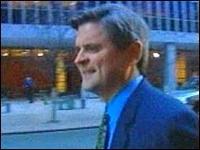
NEW YORK (CNN/Money) – Former America Online Chairman Steve Case is investing $20 million in a producer and distributor of yoga and Pilates videos, according to a published report.
The Washington Post reports that Case is going into business with Jirka Rysavy, chief executive of Gaiam Inc., who the paper reports lives in a cabin in Colorado without indoor plumbing. The newspaper said the investment is the latest one by Case associated with a new-age lifestyle in the belief they are going mainstream.
-
Middle-Age Spread Yoga Article Spreads Worldwide!
 I’ve been tracking this story since it first appeared as a press release for PRNewswire on July 19th. Almost immediately, it was picked up by both major and minor news outlets, and within 5 days, it had made about 6 hits to my inbox.
Nothing more appeared until yesterday, when it exploded for 10 more hits within 24 hours. When the latest one came in from Pravda, I just had to post something on it.
The phenomenal amount of interest in how yoga practice can prevent weight gain in middle age should be taken as a very clear sign of where, as a profession, yoga’s demographics are heading.
I can personally report that since entering middle age (I’m 47 and 6’2″), my weight has remained a constant 192-196lbs.Since the original piece was a press release, I can reproduce the whole thing for you below, along with a link to the originator of the study, “Alternative Therapies in Health and Medicine,” a peer-reviewed journal.
Press Release
Source: Fred Hutchinson Cancer Research Center
Regular Yoga Practice May Help Prevent Middle-Age Spread
Tuesday July 19, 12:01 am ET– Study suggests overweight people may benefit most from yoga’s fat-fighting potential
– Plus sidebar: Yoga tips that may encourage weight maintenance or loss
SEATTLE, July 19 /PRNewswire/ — A new study led by researchers at Fred Hutchinson Cancer Research Center has found that regular yoga practice may help prevent middle-age spread in normal-weight people and may promote weight loss in those who are overweight.
The study — the first of its kind to measure the effects of yoga on weight — appears in the July/August issue of Alternative Therapies in Health and Medicine.
Funded by the National Cancer Institute, the study involved 15,500 healthy, middle-aged men and women who were asked to complete a written survey recalling their physical activity (including yoga) and weight history between the ages 45 and 55. The study measured the impact of yoga with weight change, independent of other factors such as diet or other types of physical activity.
The researchers found that between the ages of 45 and 55, most people gained about a pound a year, which is a common pattern as people age and do not adjust their caloric intake to their declining energy needs. “However, men and women who were of normal weight at age 45 and regularly practiced yoga gained about 3 fewer pounds during that 10-year period than those who didn’t practice yoga,” said Alan R. Kristal, Dr.P.H., the study’s lead author. For the study, regular yoga practice was defined as practicing at least 30 minutes once a week for four or more years.
But the researchers noted the greatest effect of regular yoga practice was among people who were overweight. “Men and women who were overweight and practiced yoga lost about 5 pounds, while those who did not practice yoga gained about 14 pounds in that 10-year period,” said Kristal, a member of the Hutchinson Center’s Public Health Sciences Division and a professor of epidemiology at the University of Washington School of Public Health and Community Medicine.
What accounts for yoga’s apparent fat-fighting potential? Kristal, himself a longtime yoga student, suspects it has more to do with increased body awareness than the physical activity itself.
“During a very vigorous yoga practice you can burn enough calories to lose weight, but most people don’t practice that kind of yoga,” he said. “From my experience, I think it has to do with the way that yoga makes you more aware of your body. So when you’ve eaten enough food, you’re sensitive to the feeling of being full, and this makes it much easier to stop eating before you’ve eaten too much.”
Study co-author Denise Benitez, owner of Seattle Yoga Arts, agrees. “Most people practice yoga in a way that’s not aerobic enough to burn a lot of calories, so it has to be some other reason.”
One reason, she speculates, could be that yoga cultivates a form of gentle inner strength. “When we practice yoga, although it may look easy, there is some mild discomfort. You bring your body to a physical edge that’s just a little bit challenging. And people who regularly practice yoga develop the inner resources to stay with a little bit of discomfort. They develop a softness inside and an ability to stay mindful. So that when you go home after yoga class and open up the fridge and see a chocolate cake, you have the resources to stay with the discomfort of not eating that chocolate cake.”
Whatever the reason behind the apparent impact of yoga on weight maintenance and loss, Kristal stresses that these findings need to be replicated.
“I think it’s time now to do a carefully controlled, randomized clinical trial to see if adding yoga to a standard weight-loss program can help people lose more weight or keep it off longer. The other message, particularly to people who might be overweight, is that yoga is a noncompetitive activity. It’s something that everybody can do. It brings so many benefits, and if one of the clinical benefits is that it can help you control your weight, then that’s a great thing.”
The participants in the yoga study were part of a larger ongoing Hutchinson Center study involving more than 75,000 residents of western Washington called the Vitamins and Lifestyle, or VITAL, study. This $4.2 million project, which began in 2000, aims to determine whether vitamin, mineral or herbal supplements reduce the risk of cancer.
SIDEBAR
YOGA TIPS THAT MAY ENCOURAGE WEIGHT MAINTENANCE OR LOSS
Study co-author and yoga teacher Denise Benitez, owner of Seattle Yoga Arts, offers the following suggestions for enhancing one’s yoga practice. These tips may be particularly helpful for those who wish to maintain or lose weight:1. Practice in a room without mirrors, and pay more attention to your
internal experience than to your outer performance.
2. Learn to feel sensations more and more subtly, so that you become
deeply involved in and curious about small movements, sometimes called
micro-movements.
3. In your poses, find an edge for yourself where you are challenged but
not overwhelmed. At this edge, practice maintaining a clear, open and
accepting mental state.
4. Give yourself permission to rest when you feel overworked.
5. Pay close attention to what you are saying to yourself as you
practice, and make an intentional effort to appreciate your own
efforts and innate goodness.
6. Go to class faithfully, arrive early, and talk to a few people in your
class before class begins.
7. Buy your own yoga mat and bring it to class.
8. Realize that the development of qualities like patience, discipline,
wisdom, right effort, kindness, gratitude and many others will arise
from your yoga practice. These qualities create a steady and soft
mind.
9. Find a teacher who offers a balance of gentleness and firmness and
whose teaching inspires you to practice from your highest self.
10. Recognize that simply attending class is a major statement of
courage, self-care, and positive momentum. Realize that you are
inspiring others as you become more true to your deepest desires.
At Fred Hutchinson Cancer Research Center, our interdisciplinary teams of world-renowned scientists and humanitarians work together to prevent, diagnose and treat cancer, HIV/AIDS and other diseases. Our researchers, including three Nobel laureates, bring a relentless pursuit and passion for health, knowledge and hope to their work and to the world. For more information, please visit fhcrc.org.CONTACT
Kristen Woodward
206-667-5095
kwoodwar@fhcrc.org -
Terrific IAYT Article on Yoga and Osteoporosis
 The International Association of Yoga Therapists has released an article
on Yoga for Osteoporosis, in response to important questions from yoga
teachers, therapists, and practitioners.
The article is now available for viewing at the International Association
of Yoga Therapists website.
The article, “Osteoporosis: An Opportunity to Serve”, by Matthew J.Taylor, M.P.T., R.Y.T., will be published in October in the Fall 2005 issue of the International Journal of Yoga Therapy.
We are releasing it early, and making it freely available, as both a public and yogic service. Feedback is most welcome and can be sent to mail@iayt.org or submitted via the “Contact” form at our website. We hope that this article will be the first of a series of public service articles.
IAYT is grateful to Trisha Lamb for her help bringing this article to publication as one of her final contributions in her long and phenomenal service as Associate Director of IAYT and Editor-in-Chief of the the International Journal of Yoga Therapy.
Kelly McGonigal, Ph.D
Editor-in-Chief, International Journal of Yoga Therapy -
Yoga classes ‘provoke’ prisoners

A prison in Norway has stopped holding yoga classes after it found that instead of calming inmates, they were actually making some more aggressive….
…On the negative side, the yoga had provoked “strong reactions: agitation, aggression, irritability, trouble sleeping and mental confusion”…deep breathing exercises are an essential element of Yoga…but such exercises could make inmates more dangerous by unblocking their psychological barriers… -
Yoga teacher’s fishy record bid
 Ananova – England,UK
An Indian yoga teacher is hoping to get in the record books by swallowing fish and blowing them out of his nose.
G P Vijaya Kumar swallowed 509 small fish through his mouth and blew them out of his nose within one hour, reports The Asian Age.
He was inspired by American Kevin Cole who holds the record for the longest spaghetti strand blown out of a nostril in a single blow.Mr Kumar, of Gunduppalavadi in Tamil Nadu, started experimenting with live fish after successfully ejecting peas and corn through his nose. He said: “This is a kriya (method) in yoga where the nostrils are purified by swallowing fishes and bringing them out of the nose. “I swallow the fish and take deep breaths to guide it through my nose. There are times the fish might glide back to the mouth, but by inhaling hard it can be brought up quickly.”