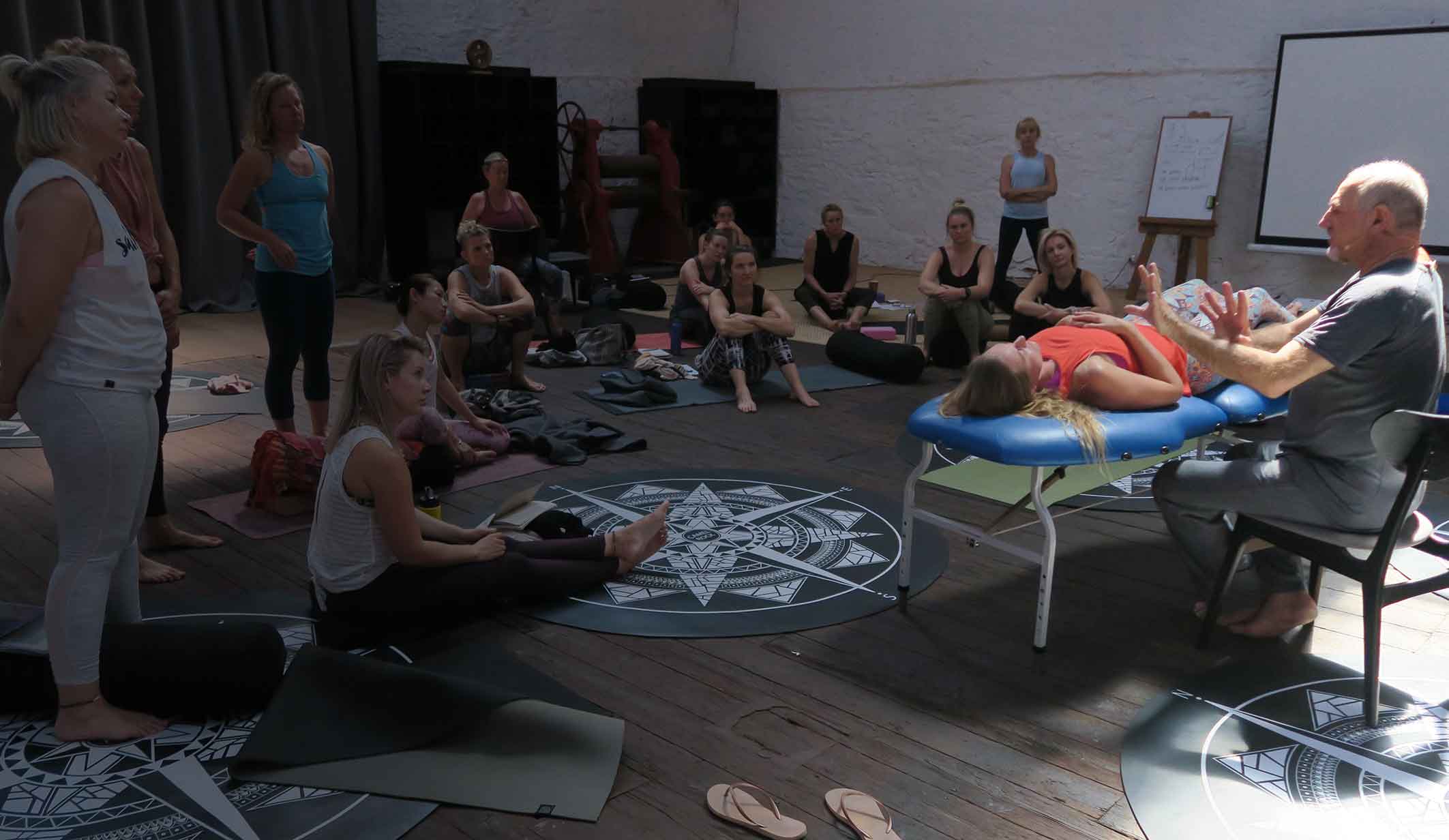
In the process of promoting our upcoming event at Kripalu, “Celebrating Desikachar: A Life in Yoga, A Legacy of Learning,” we have heard from many people who are unable to attend, but who nevertheless felt moved to share their personal stories about how deeply they’ve been affected by his teachings.
We have found a way to include these voices at our event – we are inviting anyone, from anywhere in the world, to send in a short paragraph about how their lives have been touched by the life and teachings of Desikachar. We will print out your message and hang it on a wall of remembrance at our event. After the event, we will post these messages to a Facebook group page for the world to see.
It must be a sign I’m getting old that I’m so inordinately tickled when I can extract a tiny favor from the space-time continuum.
While teaching in England 2 weeks ago, we observed *Daylight Savings Time on the Sunday morning of my workshop by luxuriating in an extra hour of much needed sleep. Since the USA observes DST a week later than the U.K., I got to sleep in again last Sunday. Though two hours of extra sleep in the space of one week may not seem like a big deal, it thrills me beyond measure that I won’t have to give back one of those hours next spring – I get to keep it for the rest of my life.
Time, of course, always wins in the end – but in my case it will have to wait an extra hour.
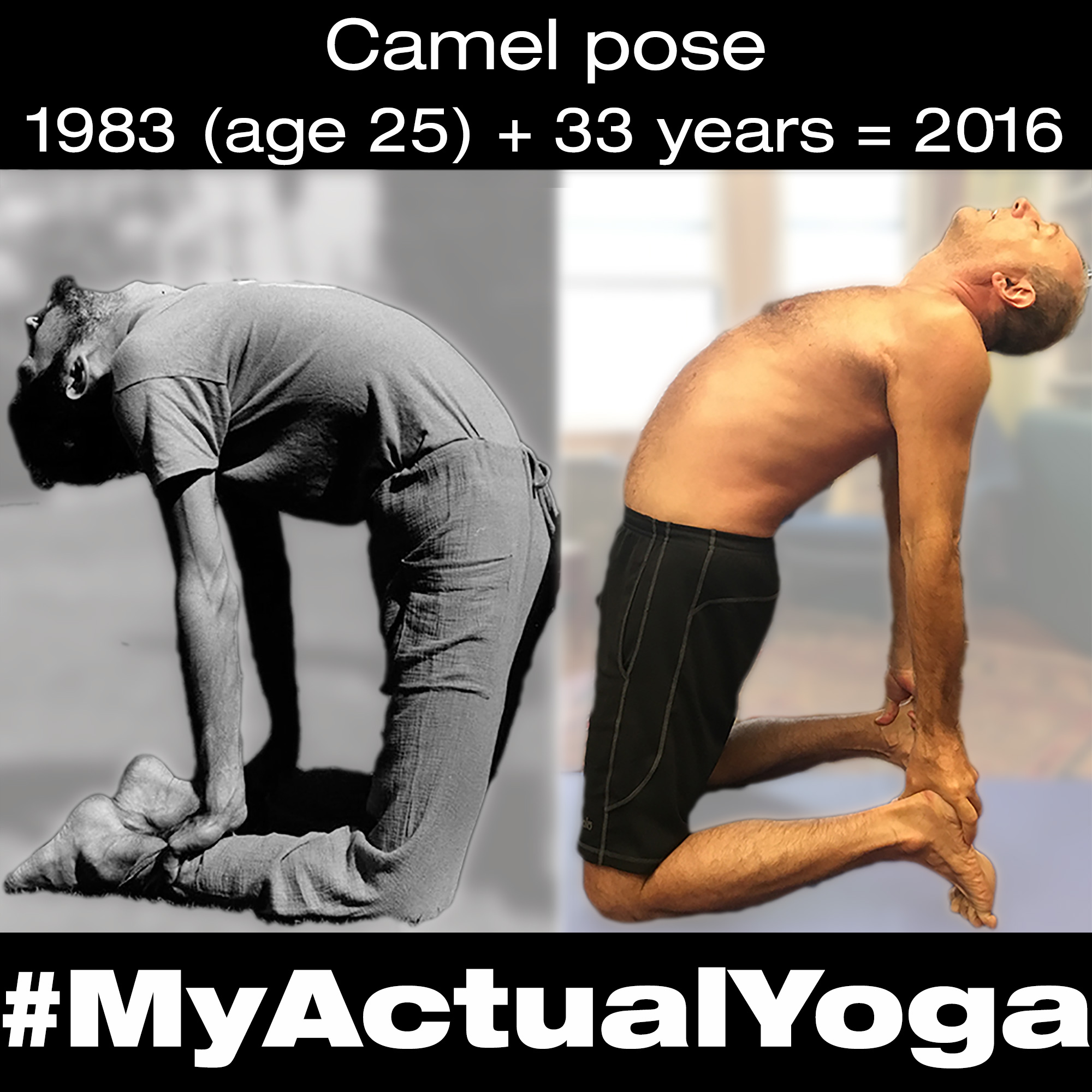
I’ve been prepping my Portland workshops at yogaRIOT this weekend (there’s still room so come join me if you’re in the area!), which will conclude Sunday afternoon with “Better Backbends Through Breathing.” One of the slides in my presentation is a 1983 photo of me in Ustrasana (Camel Pose). It got me wondering what the 25-year-old version of my body would look like alongside my 58-year-old 2016 Camel Pose. So, I asked Lydia to take a photo of me on the mat in our living room so she could combine them in a single visual.
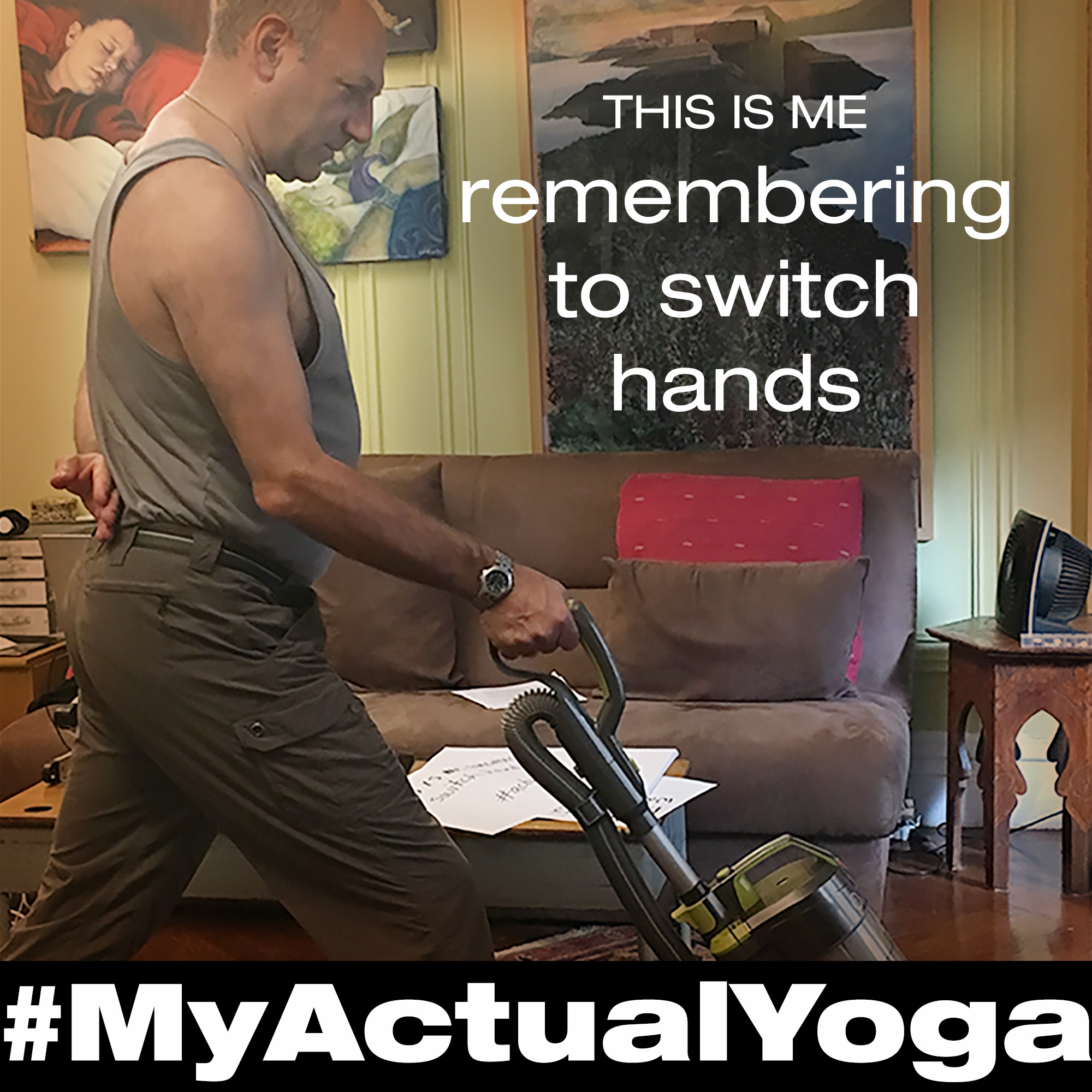
Seeing the resulting image got me thinking about all the old photos I have of me doing asana, and how they would compare to my present-day versions. I’ve also been thinking for a while about how difficult it is to visually depict how yoga practice shows up in off-the-mat situations, because so often, it’s a very internal process that does not make for a particularly interesting photo-op.
Uniting these two musings, I will henceforth supplement my Instagram, Twitter and Facebook feeds with images tagged #MyActualYoga. You are welcome to use the hashtag as well if you have interesting before/after asana images to share, or if you can find a visual way to represent how yoga shows up in your daily life. You can see examples of both in this post.
Let’s put something different on Instagram yoga feeds! It may not be pretty, but it will be real.
We are fresh back from Yoga Journal Live’s first event of 2016 – an annual gathering at the beautiful San Francisco Hyatt Embarcadero. The students in my classes – and especially in my full-day Monday immersion were very receptive, engaged and enthusiastic about a major theme for 2016: Asanas Don’t Have Alignment – People Have Alignment.
Between now and March, I am teaching four weekend workshops that will “re-imagine alignment” from this provocative perspective, along with my other breath-centered topics:
To whet your appetite, I’ve attached below a classic excerpt from my anatomy course in which I share a few pointers about how to choose your priorities in building the foundations of alignment for any asana.
For our third installment of breath myth-busting, we hear from presenters Lynn Martin and Jessica Wolf – two of the country’s most experienced breath educators – who weigh in on the subject of breath-holding.
MYTH: “habitual breath-holding is harmless.”
Lynn MartinJessica Wolf
There is nothing positive to be said about habitual breath-holding. It is often an involuntary response to a moment of anxiety or stress. Many of us hold our breaths when we are trying to think of the best verbal response to a challenge, or the correct answer to a question that has been posed. But there is no perceivable benefit to doing that. If one needs a pause to think before speaking, it would be more productive to continue the flow of air into and out of the lungs while pondering the situation, thereby increasing the possibility of oxygen renewal to the brain.
Breath-holding interrupts the synergy and organization of the neuro-musculo-skeletal coordination that keeps the breathing process moving freely and fluidly. Breath-holding brings the diaphragm and all of the respiratory muscles to a sudden halt. It builds up unnecessary pressure in the thorax and in the throat, also interfering with the potential oscillation of the vocal folds as they prepare for the next spoken utterance.
Our teacher, Carl Stough, coached competing swimmers not to hold the breath while swimming under water. He suggested that the swimmer should first inhale and then extend the exhalation phase for the duration of time that the head is submerged, surface for the next inhalation, then exhale again under water, thus keeping the continuity of breathing movement.
What emerged was a rather interesting exploration of my views on how we train people, and what it takes to really absorb the kinds of things we teach in yoga trainings.
Enjoy! If you’d like to join the discussion, please leave a comment.
The Yoga Therapy Summit was hosted by Surya Chandra Yoga Sanga and lovingly organized by JJ Gormley-Etchells and her great team. It provided a wonderful, intimate opportunity for some of T.K.V. Desikachar’s senior teachers to gather in one place, share memories, stories and teachings from the Krishnamacharya lineage.
[portfolio_slideshow id=1336]
You can learn more about my fellow presenters at their sites:
We are privileged to welcome back the amazing David Hykes to The Breathing Project in New York City for two programs this week. As always, I give my highest recommendation to these, or any other programs with this modern master of Harmonics and sound.
On Wednesday, June 6th, David will be taking over my evening class time to lead “Essential Harmony and the Spirit of Awakening.” This session integrates the universal sacred music called Harmonic Chant with sound yoga, mantra, breath and sensory awareness practices, movement, and healing harmonization. On Saturday, June 9th: David will conduct a “Harmonic Meeting,” combining a concert program, awareness practices, and participatory group Harmonic Chant.
The long wait is finally over! e-Sutra has been inactive for the past 2 months due to the final work on my new book “Yoga Anatomy” published by Human Kinetics. It is currently at the printer, and will be available in 3 weeks.
I will post some exclusive previews of the book’s content in the next day or two, as well as an invitation to the NYC book release party, so stay tuned!
Pre-orders are already moving quite briskly, and it is already the #11 Yoga book on Amazon. If you would like to support e-Sutra, use this link to pre-order your copy from Amazon now!
How to Practice and Teach Individualized, Breath-Centered Yoga in Group Settings
This is a new workshop that I’ve designed especially for my first-ever scheduled visit to Toronto. It promises to be a rich and rewarding learning experience for all of us.
Date: March 30 – April 1, 2007 Time: Friday: 7:15 to 9:15pm Saturday: 9:30am to 5:00pm Sunday: 9:30am to 4:00pm
Location: The Yoga Lounge TORONTO Workshop Description Breath is life. Breathing brings energy into the body. Breathing is also one of the main ways the body releases toxins. Breathing is essential to all asana practice. In this workshop we will explore asana from the perspective of breath awareness and breath repatterning with an emphasis on how to practice or teach these skills in group settings. All levels of yoga students and yoga teachers will be able to deepen their practice and teaching.
Our weekend includes:
Sessions that will be devoted to cultivating increased breath and body awareness. We will emphasize the development of observation skills, both of oneself and others.
Practice sessions interspersed with periods of individual focus and partner work, and how to apply the insights gained to group classes.
We will discuss the anatomical, philosophical and spiritual basis for Yoga and breath work.
We will also explore how to creatively use sound to deepen breath and body awareness.