Just finishing a month of teaching in Australia, I’ve had innumerable opportunities to practice a principle my teacher T.K.V. Desikachar often emphasized: “Yoga is relationship.” One of our Brisbane hosts is the witty and fierce president of Yoga Australia, Leanne Davis. I was intrigued to learn her community is small enough that they all know each other. With only around 100 teaching programs in the whole country, Yoga Australia is able to provide support, check-ins and coaching in a really personal manner. It’s not a model that could directly scale in the U.S., but it’s worth noting that the only valid way to deal with ethics and scope of practice issues lies in the context of the community in which teachers operate. Studios, peers, colleagues – as well as the students – always need to be in direct relationship to teachers, and feel empowered to give them feedback. We all need to be answerable to someone, but that someone should be part of our immediate community.
I have been thinking about the role of coaching and personal connection in relation to the specialized work I do. It will be a big part of my upcoming 5-day (30-hour) immersion “Breath Education: Coaching Better Breathing,” August 20-24, 2018, under the aegis of my educational nonprofit, The Breathing Project, Inc. With an intimate group, I look forward to covering the anatomical and practical underpinnings of breath coaching, as well as how to nurture supportive relationships for therapeutic breath work with individuals and groups.
Having just turned 60, I can confidently say that every good thing I’ve achieved in my life, every positive effect I’ve wrought, has been based on a willingness to be related. Whenever I shied away from relationship by generalizing or depersonalizing, I have failed. I am committed to remembering this for my next 60 years.
Lydia and I are preparing for a month of travel and teaching, in fact it’s our biggest teaching tour to date! We are really looking forward to the upcoming tour, which takes us to:
We work hard on these teaching tours, but we always schedule a couple days on each side of the workshops to enjoy the host city. We’ve heard Sorrento is beautiful and while I’m teaching there I’ll turn 60 years old (on March 13). Word on the street is there may be some celebrating going on, so come out to the workshop on March 14th to help cheer me into my 7th decade! I believe there’s still room in some of the workshops, so if you or someone you know is down under, please come out and say hello.
All this planning got me feeling nostalgic about my first visit to New Zealand and Australia in 1983 so I dug out some old photos. At the time, I was living in Los Angeles with my partner Lynda Huey where we worked at Dr. Leroy Perry’s International Sportsmedicine Institute. Lynda was the athletic director and, although I was teaching yoga flexibility to the athletes, my main job was to administer a new form of electro-therapy that was getting great results with pain and soft tissue injuries. The instruments I specialized in, the Electro-Acuscope and Myopulse, were in great demand around the world at the training areas of track meets so, eased by the fact that Lynda and I were also working part-time as travel agents, it created a perfect opportunity to travel.
August of 1983 found us in Helsinki, Finland for the first-ever world championships of Track and Field. Towards the end of 1983, we were invited by Australian Olympic swimming legend Murray Rose to present our rehab work at a Sports Medicine event at Sydney’s Town Hall. After a stop to visit some friends in Auckland, we arrived in Sydney and were taken on a whirlwind tour of the city by Murray and his friends.
In this photo, I am posing for an AP photographer with Evelyn Ashford, who at the time was the world’s fastest woman. Evelyn had sustained a hamstring injury in an early heat of the 100 meter dash, and I was treating her with the equipment. She recovered well enough to make the U.S. team and win a gold medal the 1984 L.A. Olympics in spite of a slight re-injury at the team trials (for which I also treated her). As part the promotion for the Sydney event, I was invited to a T.V. interview on “Good Morning Australia.
This photo shows me on set preparing the equipment for my segment. I am wearing my best (and only) suit for the occasion. I was apparently still wearing that outfit when we visited a game preserve outside Sydney. There, I met kangaroos for the first time. Once the film was developed back in L.A. , I also noticed for the very first time that I was – at the tender age of 25 – going bald on the top of my head. I was shocked and devastated, but I’ve gotten over it.
The rest of our trip was terrific. We traveled to Canberra to tour the brand new Australian Institute of Sport, and the headed up the Gold Coast to visit with some friends in Nambour before continuing up to check out the facilities at the University of Queensland in Brisbane. Finally, we went all the way north to Cairns, where we had a memorable scuba dive off the Barrier Reef. Lynda and I actually returned to Sydney in 1984 for a return visit that was more of a pleasure trip.
Transitioning out of the The Breathing Project’s physical space in July has required lots of moving, reconfiguring, and recalibrating.
For the first time in over 30 years, all my possessions are in the same zip code (10025). It’s a bit of a tight fit in our living space as I’ve accumulated three sets of almost everything: office supplies, clothing, bodywork equipment, books. Previously split between office, city home and country home, all my stuff has – quite literally – come home to roost. Much winnowing is required…it’s a process.
At the same time, my newly freed-up schedule has more space for travel and teaching. For the first time in 14 years I will not have to be in New York City every Wednesday during the scholastic year to teach my Yoga Anatomy courses, so we have been able to schedule more lengthy international teaching tours. Following our annual visit to one of my favorite places, North Carolina’s beautiful Asheville Yoga Center (September 16-17), and the Chicago edition of the Yoga Therapy Summit (September 30-October 1), Lydia and I will be off to Europe (the first of two visits this fall) for a 3-week tour:
Looking ahead to 2018 I’ll be spending my 60th birthday about as far away from home as possible: we’ll be in the Southern Hemisphere in the midst of a month-long teaching tour across New Zealand and Australia. I’ll be sharing more details about that trip in a future post.
So, as the start of my seventh decade approaches, I will be doing my best to focus on the theme that emerged this last month: “more space — less stuff.”
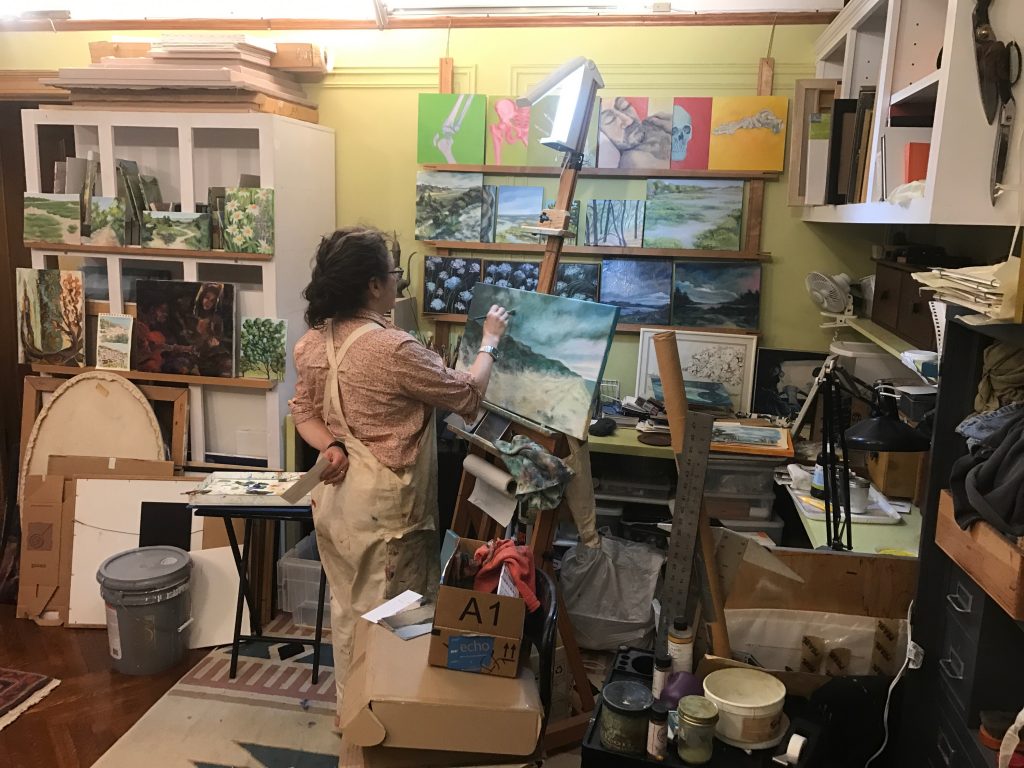
As much as I enjoy being a professional traveler, I think I most love coming home after a long trip. Lydia and I have learned to prepare our apartment prior to leaving, in anticipation of that comfort and joy – and also because the last thing we want to deal with when walking in the door is a mess. This means the refrigerator has been emptied of anything that might rot or sour, garbage cans are clear, laundry basket is ready for a new load, and surfaces cleared (as much as possible considering that Lydia is a working artist). I’ve been trying to teach my 17-year old about the joys of this kind of preparation, and it seems to finally be sinking it a bit.
Sharing a one-bedroom apartment with an artist and a full painting studio can make such organization challenging, but it’s worth it to return to a studio full of paintings left in various states of completion and maturity. It’s marvelous how quickly the studio resumes its joyful chaos as soon as Lydia starts up again. A lot of the paintings visible in the photo will be in her upcoming show in Truro, on Cape Cod.
After teaching annual workshops at a number of studios for the better part of a decade I also anticipate returning to these for the home-like atmosphere and the pleasure of relationships cultivated over the years. We got back from our highly successful Istanbul workshop on Monday afternoon and I managed to stay awake long enough to play basketball that evening. In spite of my body clock being set to 3AM, I managed to hit a couple of game winners but should have probably quit while I was ahead, as I was a liability in the last game. That night’s exhaustion helped me return to New York time as quickly as possible, which was good since I scheduled an airport pickup for my teenager plus 6 client sessions the next day.
Today we head back to Austin, TX to teach at YogaYoga Westgate for Rich Goldstein, Laura Forsyth and Lori Johnson. There will be meals at favorite – and new – restaurants, and catching up on kids/parents/romances and professional development. How lucky I am to get to *come home* to so many places and people!
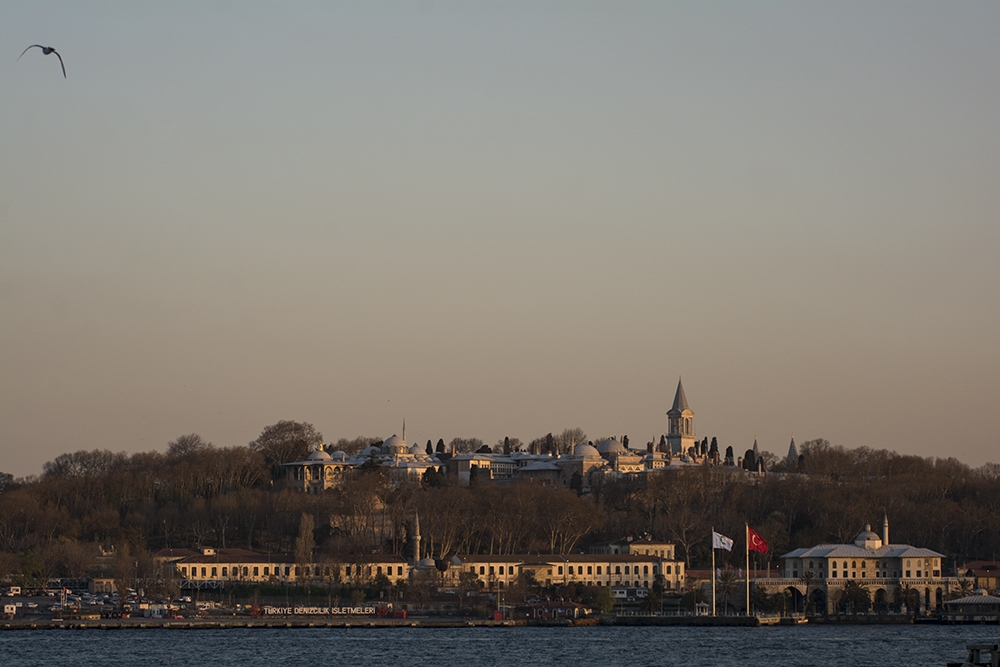
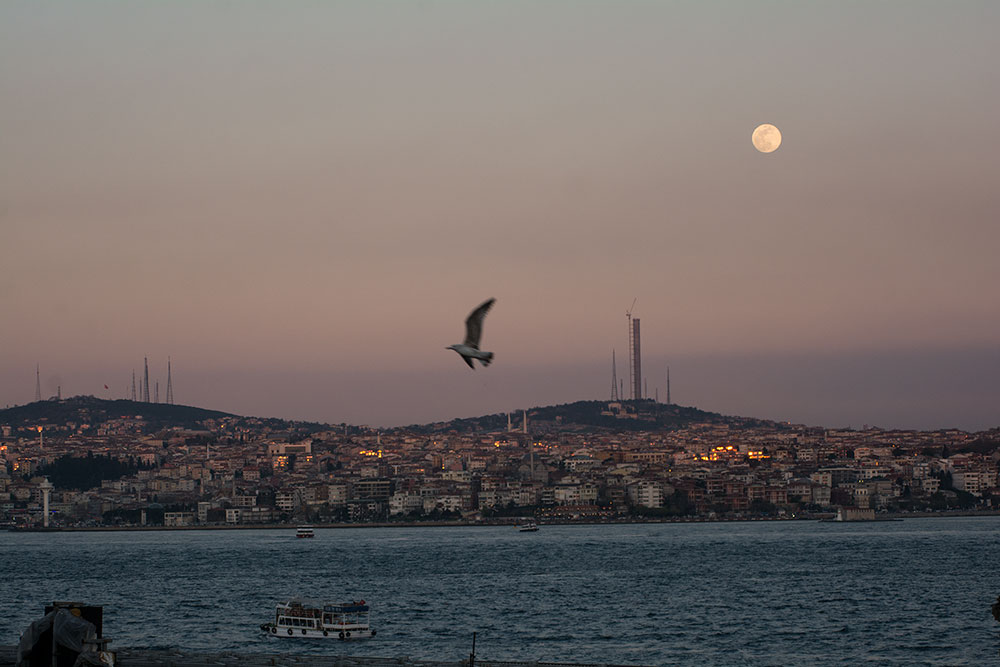
There’s such political turmoil in the world, and I admit I was a bit concerned about a trip to Istanbul, but now that we’ve arrived I’m thrilled. Later this week I’ll be teaching for Cihangir Yoga but for the next few days Lydia and I will be touring the city and enjoying this gorgeous view.
View of Topkapi Palace over the Bosphorus at dusk, shot from the Karaköy neighborhood
Recently I was invited to teach by Anna McLawhorn at her Three Dog Yoga studio in Santa Rosa, CA. Anna had signed up for my online course, Principles, a couple of years ago but had just recommitted to both her own and her studio’s education, declaring “2017 our year of learning.”
When I was first developing my online courses I had hoped to be able to to foster student/teacher relationships well beyond my physical sphere so hearing from Anna and experiencing her enthusiasm for ongoing learning was an inspiration. Often we invite workshop hosts to interview me prior to visiting their studios but this time we turned the tables. I was eager to hear about Anna’s process and path so I posed some questions which I’ve used as seeds for this post.
Q: How did you learn about my teaching?
Anna McLawhorn, founder and chief joy instigator of three dog yoga
Anna: I received an advance copy of the book “The Science of Yoga” (William J. Broad’s 2012 book). Upon reading it, I wanted a second opinion so started Googling and found your video “rants” (see them here: one, two , three, and four). I’d been a huge fan of the book Yoga Anatomy, so I was delighted that these led me to all your teaching videos. I signed up for the Monday email list and your online Principles course a bit later.
Leslie: I remember so clearly that storm of passionate debate William Broad’s article unleashed in the yoga/web/social media atmosphere 5 years ago, at the beginning of 2012. Not only was I motivated to produce those video “rants” I went to the trouble of composing my Amazon review of his book in advance, so I could post it at 3:00am East Coast time, when the book officially went on sale!
Q: What made you reach out to bring me to your studio?
Anna: I’ve been exploring the concepts presented in Principles and in the various YouTube/email videos in classes, workshops and trainings for almost a year. Our students and teachers responded with enthusiasm and curiosity. In the wake of the 2016 election, there was a feeling of despair about where our country and the world at-large is heading. One thing that occurred to me is how powerful learning is for the human psyche. When we are learning, we are expanding. So, I declared 2017 our year of learning. Starting with anatomy only makes sense: the more one learns about the body, the more we understand ourselves…and each other, our connection and our uniqueness.
Leslie: I agree wholeheartedly. Early on we saw the potential of online learning for the yoga community, not as a replacement for direct human contact, but as a way of connecting with people to whom I would otherwise not have access. To transform my virtual presence into an actual physical visit is really terrific.
Regarding the 2016 election, it’s clear that every generation shares a handful of singular, historic, transformative moments that are forever etched into our psyches. I can recall and re-tell every detail about where I was and what I was doing when the Kennedys and MLK were killed, when Apollo 11 landed on the moon, when the twin towers came down on 9/11 — and, on the night of 11/9 when the outcome of the 2016 election became clear.
That night, I recall thinking how many of my fellow yoga educators would be faced with rooms full of sleep-deprived, emotionally frazzled students seeking solace from teachers who were pretty much in the same boat. That’s when I posted to following to social media:
Our government does not own this country, or your life. Regardless of which gang is in power at any given moment, never forget that.
All yoga educators: stress reduction is now the world’s #1 growth industry. Let’s do what we do best – stay centered and offer safe havens.
That is also why, on that Wednesday afternoon’s class at The Breathing Project, I felt moved to put this slide up on the wall as my students entered the room.
Q: What has your experience with the online course been so far?
Anna: I’m addicted. It’s the only TV I watch. It’s usually hard for me to find 2 hours in the day for anything, but not for these sessions. I learn things I’ve always wondered about; I question and reorganize and open up dialogues about things I’d held as “fact”…this may sound weird, but I love the homework. At one point I was having trouble with a concept. I looked at the homework questions, then decided to sit with them/sleep on them. I woke up the next morning and everything had fallen into place. If I hadn’t needed to complete the homework, I may not have actually processed the lesson.
Leslie: That’s really good to hear. I always hated homework (to be honest, I mostly just hated school on principle), so asking my students to do homework didn’t come naturally to me. We’ve worked hard over the years to improve the quality of the homework questions, and to offer the best support possible to our online students.
Q: You described your community as “…wonderfully nerdy when it comes to all kinds of learning…” – this is very appealing to me, but can you provide an example?
Anna: Though we teach vinyasa yoga/power vinyasa, the classes that our students enjoy most are the ones where we get deep into a concept, where we explore different ways of approaching posture. They enjoy “stop action” sessions where we break down a pose in order to make it more effective in individual bodies. They ask good questions…and they LOVE it when the skeleton comes in for workshops!
Leslie: This sounds exactly like my kind of crowd! I can’t wait to meet you and everyone there. I’m certain we’ll have a lot of fun learning together.
So, if any of you reading can make it to Northern California over the weekend of March 11-12, please join us at Three Dog Yoga in Santa Rosa, CA.
After a brief teaching lull for the holidays, my 2017 schedule is getting off to a running start with four upcoming workshops — all at new locations — three of them driving distance from New York City.
First up, I’m teaching a one-day immersion at YogaSpace in Bethel, CT on Sunday, Jan. 29. This event is already sold out, but there are two other local events coming up soon on Long Island and Westchester.
The weekend of Feb. 4 & 5 at Yoga Nanda in Long Beach, NY will cover some of my most popular topics, including an intro to breath-centered yoga and bandhas, practice and theory of backbending and twisting poses, plus a deep dive into foot anatomy and healthy walking habits.
On Sunday, Feb. 19, I will lead a brand-new program designed specially for my good friend Patty Holmes at The Yoga Garden in White Plains, NY. Inspired by Patty’s role as clinic coordinator at The Breathing Project, I will teach a therapeutically oriented day of “Breath-Centered Asana and Vinyasa — Individualized Adaptation and Modification.”
We are also excited for our first visit to Louisville, KY on Feb. 11 & 12 at Bend and Zen Hot Yoga. A full weekend program features explorations of breath, spine, bones, muscles and alignment. We also have some schmooze time scheduled for Saturday evening’s wine and cheese meet-and-greet book signing.
So, come on out for one of these great events! I look forward to meeting you in person.
In anticipation of my upcoming “Yoga and the Respiratory System” workshop at Soul of Yoga’s therapeutic training in Encinitas, CA, I’m posting a snippet of an article I’ve been working on to discourage people from feeling they must always get the deepest possible breath. This is a preview of one of the topics I’ll be covering in an information-packed two days of learning and exploration at Soul of Yoga. Other topics will include:
How breathing occurs on every level – from cells to systems and beyond
The basics of breath physiology
The structure and function of the diaphragm
The key structures involved in breathing
How breath coordinates with and supports movement
The physiology of meditative states
Western and yogic models of anatomy and physiology
The physical correlates of the koshas, chakras, nadis and kundalini
If you can get to Southern California (and who doesn’t want to spend time there in December!), come join me Friday and Saturday, December 9 & 10.
To read many yoga and breathing books, one could get the impression that deep breathing and maximal oxygenation are the holy grails of health, well-being and enlightenment. The assumption is that the more deeply you breathe, the more oxygen you will get in, the more carbon dioxide you will get rid of and the healthier you’ll be. The facts are:
not enough carbon dioxide is dangerous,
deep (maximal) breathing is only occasionally appropriate, and
too much oxygen is toxic.
Breathing activity should always be linked to your body’s metabolic needs. If your level of activity requires a larger than usual supply of oxygen, deeper or more frequent breathing is perfectly appropriate. That same level of respiratory activity, if applied to a resting state, would produce blood alkalosis (hyperventilation).
Your body has homeostatic mechanisms that prevent a toxic excess of oxygen from building up in the tissues. The idea that one can improve health by increasing O2 concentrations in the blood is physiologically incorrect, and shouldn’t be confused with the immense relief that accompanies a deeply satisfying breath. In fact, freeing the breath allows respiratory activity to more closely match body metabolism by releasing excessive, oxygen-hungry tension from the breathing musculature.
Your body is many times more sensitive to changes in blood levels of carbon dioxide than it is to oxygen. Carbon dioxide plays a critical role in helping hemoglobin transport oxygen from your blood to your body’s tissues. If you don’t have enough CO2 in your blood, the O2 gets held too tightly by the hemoglobin, and not enough oxygen will be released into your tissues. The idea that one can improve health by ridding oneself of excess CO2 is physiologically incorrect, and shouldn’t be confused with the simple act of exhaling more effectively (which is a prerequisite for filling your lungs).
This is why I have gotten out of the habit of using the phrase “take a deep breath” when teaching yoga. Instead, I try to say things like, “take a relaxed breath” or “let your body fill with breath.” These are ways I seek to help students trust that their body knows what it is doing, and the best breathing happens when we get out of its way.
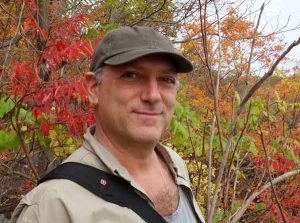
I love the fall, love the temperatures in the Northeast, and the colors, but mostly I love that my teaching schedule always kicks into high gear.
On Wednesday October 12 I’ll start my final year teaching Anatomy of Breath-Centered Yoga: Appendicular Body Focus at my New York City studio, The Breathing Project – a bittersweet occasion because I love this teaching and love the students and community we’ve built, but I am also filled with excitement about the opportunities for change and growth associated with closing the studio next summer.
Right after Wednesday’s class I’ll be heading to the airport to fly to Yoga Center of Minneapolis where I’ll present a four-day immersion focusing on breath and re-imagining alignment. We had a magnificent time at this beautiful studio last year and we’re eager to return.
Then we return to Yoga on High in Columbus, OH, for a workshop focused on the therapeutic aspects of Yoga. We’ll be doing some of my favorite things: a Hands-on Assisting Lab during which I’ll share teaching techniques developed over the past three decades of working therapeutically with groups and individuals. Also scheduled is Case Studies and Clinical Analysis, which follows the format in which I observed my teacher, T.K.V. Desikachar, work one-on-one with clients.
To finish out my year in December I’ll be returning to one of my favorite haunts, Soul of Yoga, in Encinitas, CA. Each year I’ve taught there has provided an engaged group of teacher trainees. This year we’ll explore Yoga and The Respiratory System, covering the energetic phenomenon of breathing and how it occurs on every level – from cells to anatomical systems and beyond.
If you’re near any of these locations, or willing to take a little trip, I’d love to meet you in person so make sure to introduce yourself!
My upcoming weekend workshop at Yoga on High in Columbus, Ohio will focus on the healing potentials of Yoga. Whenever I teach this topic, I like to play a section of a 1996 documentary I helped produce in which my late teacher T.K.V. Desikachar talks about students who showed up at the Krishnamacharya Yoga Mandiram seeking help. His simple words express very beautifully the essence of how yoga can help:
“The most important problem is suffering…but for some reason, the usual system of medical and health care is not able to understand the person who is suffering. They know a lot about the problem..but the relationship between this illness and the person is not so much emphasized. It’s not just illness, it’s what I call ‘the relationship to the illness’. So, when the person goes to all these (medical) people, and still they are not better, they become desperate.
“We talk to these people. We say: ‘You have some resources which are not just medicine. There’s something you have: you can still breathe…you can still talk…you can sit and move. That means you still have the energy that can heal you. Let us direct and use this energy…who knows? It may do something good.’”
In my practice, this principle has evolved into a quick checklist for new students: “Are they breathing? Are they able to focus their attention? Can they move their body voluntarily?” If the answers are even a little bit of yes, then they can practice yoga and reap immediate benefits. It is my contention that the most profound healing derived from yoga practice comes from the simplest things we teach, not the most complex. The first, simplest thing that we ask people to do is also the most powerful: bringing the body and mind together through the medium of the breath.
If you’re available and can get to Yoga on High in Columbus, Ohio October 21-23, please come join me as we explore some of the therapeutic applications of yoga.

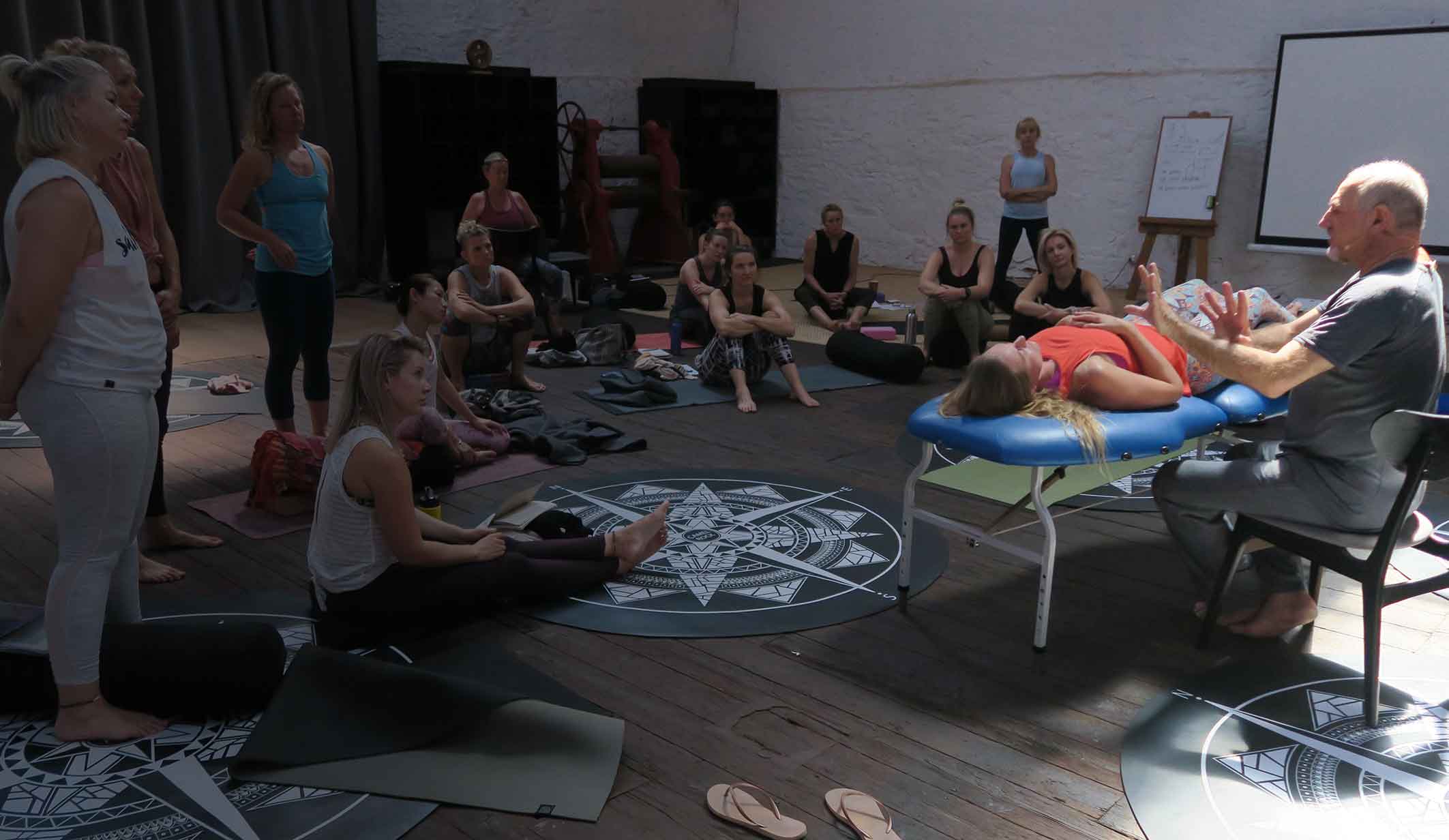
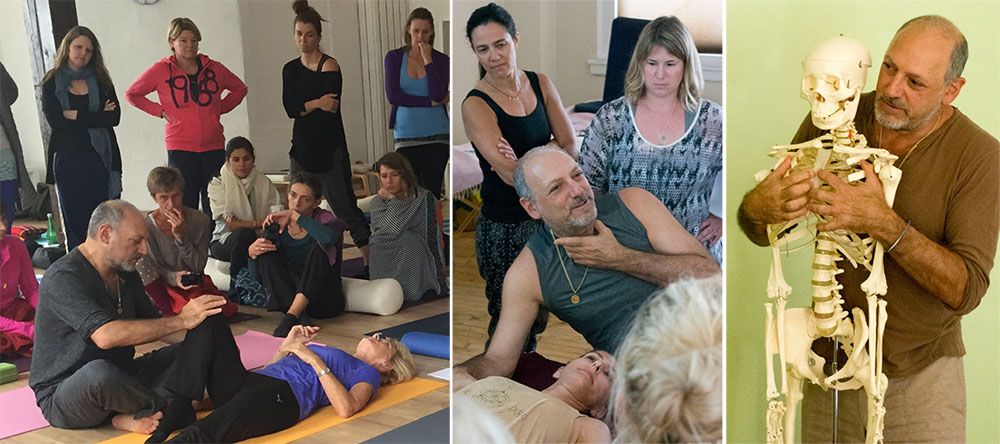 Just finishing a month of teaching in Australia, I’ve had innumerable opportunities to practice a principle my teacher T.K.V. Desikachar often emphasized: “Yoga is relationship.” One of our Brisbane hosts is the witty and fierce president of Yoga Australia, Leanne Davis. I was intrigued to learn her community is small enough that they all know each other. With only around 100 teaching programs in the whole country, Yoga Australia is able to provide support, check-ins and coaching in a really personal manner. It’s not a model that could directly scale in the U.S., but it’s worth noting that the only valid way to deal with ethics and scope of practice issues lies in the context of the community in which teachers operate. Studios, peers, colleagues – as well as the students – always need to be in direct relationship to teachers, and feel empowered to give them feedback. We all need to be answerable to someone, but that someone should be part of our immediate community.
 In this photo, I am posing for an AP photographer with Evelyn Ashford, who at the time was the world’s fastest woman. Evelyn had sustained a hamstring injury in an early heat of the 100 meter dash, and I was treating her with the equipment. She recovered well enough to make the U.S. team and win a gold medal the 1984 L.A. Olympics in spite of a slight re-injury at the team trials (for which I also treated her). As part the promotion for the Sydney event, I was invited to a T.V. interview on “Good Morning Australia.
 This photo shows me on set preparing the equipment for my segment. I am wearing my best (and only) suit for the occasion. I was apparently still wearing that outfit when we visited a game preserve outside Sydney. There, I met kangaroos for the first time. Once the film was developed back in L.A. , I also noticed for the very first time that I was – at the tender age of 25 – going bald on the top of my head. I was shocked and devastated, but I’ve gotten over it.
 The rest of our trip was terrific. We traveled to Canberra to tour the brand new Australian Institute of Sport, and the headed up the Gold Coast to visit with some friends in Nambour before continuing up to check out the facilities at the University of Queensland in Brisbane. Finally, we went all the way north to Cairns, where we had a memorable scuba dive off the Barrier Reef. Lynda and I actually returned to Sydney in 1984 for a return visit that was more of a pleasure trip.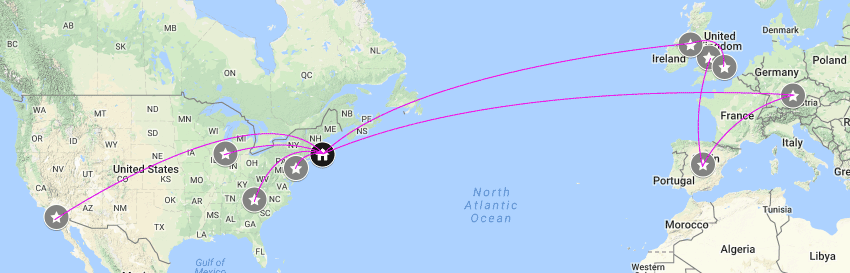

 That is also why, on that Wednesday afternoon’s class at The Breathing Project, I felt moved to put this slide up on the wall as my students entered the room.
 First up, I’m teaching
 The weekend of Feb. 4 & 5 at
 On Sunday, Feb. 19, I will lead a brand-new program designed specially for my good friend Patty Holmes at
  We are also excited for our first visit to Louisville, KY on Feb. 11 & 12 at
 I love the fall, love the temperatures in the Northeast, and the colors, but mostly I love that my teaching schedule always kicks into high gear.