 Ten years ago, I produced a weekend symposium for Kripalu called “The Future of Breathing.” To celebrate the anniversary of that wonderful event, I’ve put together a lineup of friends and esteemed breathing experts who will join me at The Breathing Project in October.
Event details are below and early discounted registration is now open. There is limited space at this intimate event, so sign up soon! Future e-Sutra posts will feature interviews with all of the presenters.
Saturday & Sunday, October 24–25, 2015, 9:30am – 5:00pm
IS THIS SYMPOSIUM FOR YOU?
- Do you teach or coach voice, acting, yoga, movement or fitness?
- Do you work in a therapeutic context as a bodyworker, physical therapist, respiratory therapist or trauma therapist?
- Do you engage with breathing as part of your therapeutic, teaching or personal practice?
- Are you interested in what’s going on in related fields and modalities on the topic of breath?
- Are you curious about where flawed assumptions, inaccurate anatomy and limited perspectives might be affecting your choices?
Join us for a special weekend symposium on breath education where we’ll dive into an expansive and inclusive inquiry into working with people and their breath. Leslie Kaminoff has gathered fellow practitioners and innovators from multiple disciplines who, like himself, are deeply engaged in questions around breathing and embodiment. Each presenter will present and share about what they’re curious and passionate about in the realm of breathing. The weekend will include lecture, interactive sessions, experiential learning, movement explorations and opportunities for Q&A.
The Art of Breathing Coordination and the Kinesthetic Voice
with Jessica Wolf & Lynn Martin
Join Jessica and Lynn as they co-present the following topics:
- Introduction to Breathing Coordination
- Animated film created by Jessica Wolf
- Common misconceptions about breathing
- Guided practices to enhance awareness of body, breath and voice
- Development of kinesthetic voice related practices
 Lynn Martin teaches functional anatomy, Ideokinesis and Breathing Coordination at New York University, in the Tisch Dance Department, Tisch School of the Arts. Lynn has studied functional anatomy and Ideokinesis extensively with Irene Dowd, who teaches at The Juilliard School and who studied there with Dr. Lulu Sweigard.
For many years, Lynn Martin also studied Breathing Coordination with Carl Stough. As a member of the Board of Directors, she worked with The Stough Institute on special educational projects and was Associate Producer of a documentary video, Breathing: The Source of Life.
Her background also includes studies in AfroCaribbean music and dance with Montego Joe, Pamela Patrick, Pat Hall, Jean-Léon Destiné and Serge St. Juste. She studied voice with Conrad L. Osborne and has sung much of the great choral-orchestral repertoire with The Cecilia Chorus of N.Y. at Carnegie Hall and Lincoln Center.
A summa cum laude graduate of Fordham University, Lynn has also taught at the Laban/Bartenieff Institute of Movement Studies, the Westchester Conservatory of Music, Brooklyn College, the National Association of Teachers of Singing and the Alvin Ailey American Dance Center. She maintains a private practice in Ideokinesis and Breathing Coordination and teaches workshops in New York City and Switzerland.
 Jessica Wolf, M.AmSAT, is an internationally recognized teacher of the Alexander Technique. She completed her training at the American Center for the Alexander Technique in 1977 and is one of the few Alexander professionals who have been teaching for more than 35 years. Throughout her career, she has explored and conducted research in respiratory function.
In 1998, Jessica established the Alexander Technique program at Yale School of Drama, where she now holds the position of Associate Professor. In 2002, she became the founder and director of the first post-graduate training program for Alexander teachers in “Jessica Wolf’s Art of Breathing.” She has certified 60 Alexander teachers around the world. Other faculty appointments include the Aspen Music Festival, The Juilliard School, SUNY Purchase, Circle in the Square Theater School, Hunter College, Sarah Lawrence College, and the Verbier Music Festival.
Jessica created the first three-dimensional animated film of the respiratory system and published Jessica Wolf’s Art of Breathing: Collected Articles in 2013. She coaches many performing artists who appear on and off Broadway, as well as in film and television. Jessica travels extensively giving workshops to performers and health care providers.
The Physiology of Healthy Breathing
with Dr. Robert Fried
Dr. Fried will help us to define healthy breathing in terms of its physiological characteristics. He will explain and demonstrate the basic instrumentation for monitoring the measurable parameters of lung and blood gases, and heart rate variability. With the insights provided by such monitoring, Dr. Fried will show how it’s possible to identify common patterns of breathing that could adversely alter respiratory function, and reveal the adverse consequences of abnormal lung and blood gases on a variety of physical conditions ranging from heart and kidney ailments to anxiety and hypertension.
 Robert Fried, Ph.D., is Emeritus Professor, Doctoral Faculty in Behavioral Neuroscience, City University of New York (CUNY) and Emeritus, American Physiology Society (APS) (Cardiovascular and Respiration Div.), and world-renowned expert in the treatment of stress and anxiety.
He is the author of The Arginine Solution, The Hyperventilation Syndrome, and The Breath Connection, and is former Director of the Stress and Biofeedback Clinic of the Ellis Institute for Rational Emotive Therapy in New York City, where he lives.
An Embodied Inquiry into Internal Respiration
with Amy Matthews
Amy will explore the movement of the breath after it enters the lungs, as it travels through blood to its final destination in the cells. This journey of internal respiration can be explored in relationship to any pattern of external breathing.
Embodying the processes of internal respiration can be a way to expand the experience of breathing from the landmarks of external respiration (thorax, lungs, ribcage and diaphragm) into an experience of breathing in every tissue of our body. We can also use this full body experience of our breath as a foundation for the exploration of a wide variety of specific approaches to breathing, and as a way to ground and orient our sense of self.
 Amy Matthews, CMA, IDME, BMC Teacher, RSMT/RSME has been teaching movement since 1994. She is a Certified Laban Movement Analyst, a Body-Mind Centering® Teacher, an Infant Developmental Movement Educator, and a yoga therapist and yoga teacher.
Amy co-authored with Leslie Kaminoff the best-selling book Yoga Anatomy, and together Amy and Leslie co-direct The Breathing Project, a non-profit educational institution in NYC.
Amy directs the BMC® & Yoga programs in NYC and Portland, OR for the School for Body-Mind Centering, and was on the faculty of the Laban/Bartenieff Institute of Movement Studies for 10 years. She teaches embodied anatomy and movement in the USA and internationally.
Essentials of Diaphragmatic Biomechanics
with Leslie Kaminoff
Leslie will provide an in-depth look at the structure and function of the diaphragm from a unique perspective – its oft-neglected role as a muscle of postural support. With so much popular attention being paid to the concept of “core support,” there is actually a dearth of well-defined, functional definitions of “core” that take into account the enormously powerful role the diaphragm plays in modulating our relationship to gravity. Through audio-visual presentations, kinesthetic and experiential exploration, and dynamic interaction, Leslie will lead participants in a transformative journey into their breathing, thinking bodies.
 Leslie Kaminoff is a yoga educator inspired by the tradition of T.K.V. Desikachar. For over three decades he has led workshops and developed specialized education in the fields of yoga, breath anatomy and bodywork. His approach to teaching combines intellectual rigor, spontaneity and humor, and is always evolving.
Leslie is the founder of The Breathing Project, a New York City based educational non-profit dedicated to teaching individualized, breath-centered yoga. His unique year-long yoga anatomy courses are now available online at yogaanatomy.net. He is the co-author, with Amy Matthews, of the best-selling book Yoga Anatomy.
SCHEDULE
Saturday & Sunday
October 24 – 25, 2015
9:30am – 5:00pm
LOCATION
The Breathing Project
15 West 26th Street, 10th Floor
New York, NY 10010
Directions
REGISTRATION
$375 early price/$350 TBP Members before Sep 12
$425 full price/$400 TBP Members
Email us at breath@yogaanatomy.org with questions or for more info.
* * *
Cancellation Policies
- Up to 2 weeks before – REFUND. Deposit will be refunded, minus a $30 processing fee.
- Up to 7 days before – CREDIT. Deposit minus a $30 processing fee may be transferred to another workshop or course at The Breathing Project.
- Less than 7 days before – No refunds or credits.
- Transfer between in-person and online courses is not allowed.
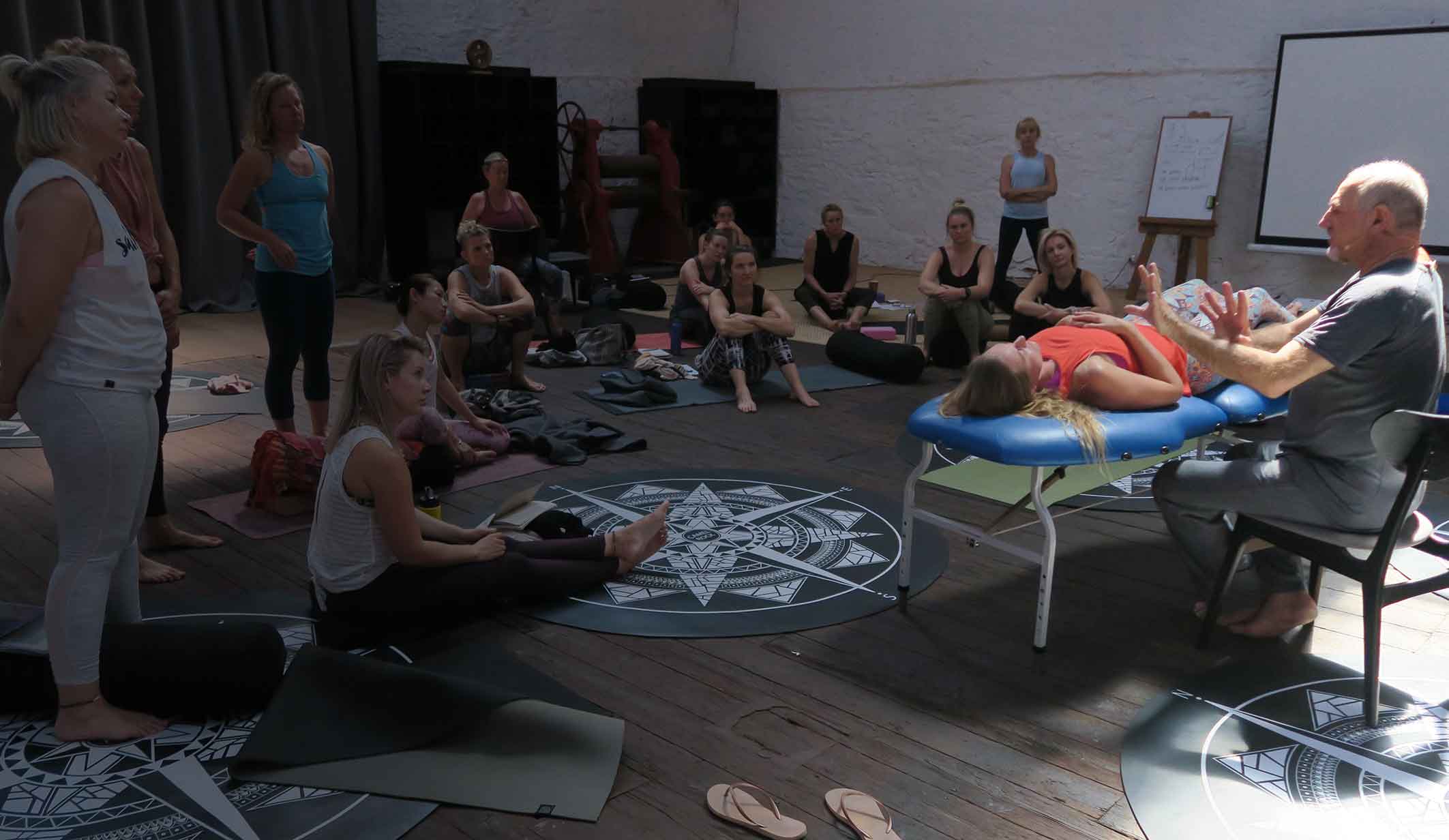


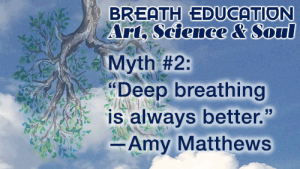 It is NOT true that we should always breathe as deeply as we possibly can. There is not one single ‘right way’ to breathe, and the most effective breath is the one that is most suited to that person, in that moment.