
Who owns Yoga?
The Debate
With bragging rights to what has become a multi-billion dollar industry at stake, the debate over who authentically “owns” yoga has never been more hotly contested. In presenting my contribution to this dispute, it is not my intent to ignore or disrespect the many centuries of deeply nuanced inquiry concerning the origins, definition or practice of Yoga — that is not my focus here. Instead, I propose a single question that would inextricably link Yoga’s definition to what I consider to be its true origin. And, the question is:
“Was Yoga invented, or discovered?”
If Yoga was invented, that means it didn’t exist on this planet prior to its development by ancient sages. Since those sages were Indian, their heirs could argue a claim to its authentic precepts, traditions and techniques — perhaps even rightful use of the word “Yoga” itself.
Many scholars, teachers and pundits assert this claim every time they cry out in the digital town square: “Yoga belongs to the Indian Vedic tradition!” This claim, of course, entitles them to proclaim everyone else to be stealing, corrupting, misinterpreting, misrepresenting, distorting, illicitly profiting from, or otherwise violating their sacred tradition.
I view this perspective to be fundamentally in error because Yoga was, in fact, discovered. I assert that Yoga could no more be invented or owned than electricity, gravity or respiration.
What the ancient sages discovered was: Yoga is an eternal, inherent attribute of nature that reveals itself as the tendency of living systems to seek equilibrium. The philosophy of Yoga seeks to understand that fundamental equilibrium, while its practice is the art of identifying and resolving any obstructions to this completely natural state.
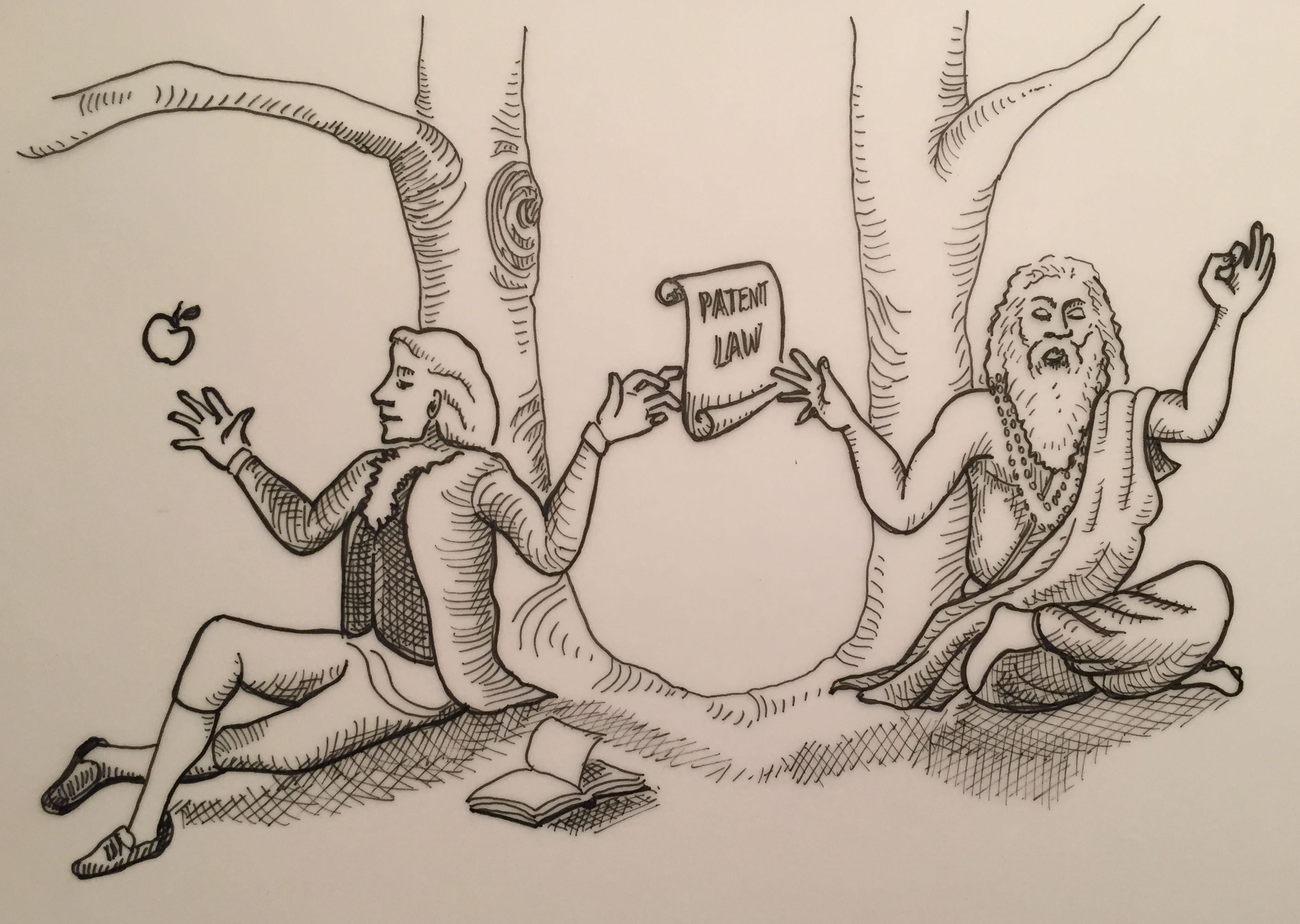
Yoga, like gravity or electricity, is a force of nature which undeniably existed before we humans started recognizing or utilizing it for our betterment. My view has ample support in many traditional teachings, which I do not deny were codified by intrepid seekers dwelling on the ancient Indian subcontinent, and we should be forever grateful to and deeply respectful towards those pioneers who first delivered us Yoga’s potential. But, to limit Yoga’s definition, application or availability based on the geographical location of its discoverers would be as ludicrous as the British claiming perpetual patent rights to gravity because Sir Isaac Newton happened to have been born in Lincolnshire.
Indian Givers
The “Vedic traditionalist” argument that Yoga has been misappropriated falls apart pretty quickly when viewed in the light of recent historical fact. The teachings of Yoga weren’t stolen from India by avaricious foreigners, they were given to the world by generous Indian masters.
My first Yoga teacher was Swami Vishnu Devananda — from Kerala by way of Rishikesh — whose guru Sivananda dispatched him from the ashram with specific instructions to spread Yoga to the entire world, which he did in his own charismatic, idiosyncratic, magnificent fashion. My core teaching lineage is that of T. Krishnamacharya — no slouch when it came to Vedic scholarship — who declared Yoga to be India’s greatest gift to the world. Never having crossed the sea himself, Krishnamacharya – that most traditional of Vedic Brahmins – nevertheless lived to see that gift permeate every corner of the globe as his students unreservedly shared his highly adaptable teachings with anyone willing to simply show up, be still and try.
It’s important to note that upon exiting his teacher’s Tibetan cave 90 years ago, Krishnamacharya’s payment to his guru in exchange for the teachings was a promise to complete a life-long, arduous task: he was charged with becoming a householder, raising a family, and sharing what he had learned. For a high-born, deeply religious Brahmin scholar like himself, this was no small promise — in fact, it was the biggest promise he could possibly have made. The India of 1925 had long rejected her own gift, and Yogis were held by most of society in the lowest esteem possible, associated with street beggars, fakirs, criminals and frauds. The tireless work of Krishnamacharya and his contemporaries resurrected, in decades, what it took India centuries to discard.
The worldwide renaissance of Yoga could never have happened if those relentless, magnanimous, Indian masters had limited their teachings to the rarefied strata of the upper castes — the same Vedic banner-wavers who are now crowing so loudly about how misguided, unschooled thieves have absconded with their precious heritage.
Yoga, if it’s nothing else, is a living, breathing, adaptable lineage of learning — open to all. It both transforms and is transformed by its practitioners. It belongs to everyone because it is part of how everyone’s living system operates. It would be the height of narrow-minded folly to think you can collect patent royalties on something that wasn’t invented in the first place. You don’t own Yoga. You can only own your Yoga.
Should you feel the need to admonish someone for not practicing or teaching a “true” Yoga, I urge you to reflect on your attitude and let it go — by offering it into the flame of Yoga — swaha. Why waste your energy obsessing about how anyone else — past or present — has chosen to interpret Yoga? It is quite literally none of your business. The dividend of this offering will be an enormous energy savings that can be re-invested into a far more profitable enterprise — uncovering your own true Yoga in the only place it’s ever been, within yourself.
……
The fire is hot, the water cold,
refreshing cool the breeze of morn;
By whom came this variety?
from their own nature was it born..
Brahmins have established their
splendid rituals for the dead;
but there are no souls in other worlds —
it’s just their means of livelihood. *
……
Leslie Kaminoff
Truro, MA
July 22, 2015
……
* Freely adapted and condensed from Sarva-Darsana-Samgraha by Madhava Acharya, translation by E. B. Cowell and A. E. Gough
……
Note to commenters:
If you wish to offer feedback of any kind, please click here to get to the comments section of this post. Comments sent via e-mail will not be read.
If you wish to express a counterpoint, please note that a pull quote and a hyperlink do not constitute an argument of any kind, much less a convincing rebuttal. With the exception of the cited poetry, what you have just read is 100% original — it was typed straight from my brain through my fingers. I sincerely request that any commenters offering dissenting views respect the spirit of my efforts, and do the same.
If, however, you totally agree with me, feel free to post anything you want. 😉